Imagine basking by your pool, only to be annoyed by pesky insects buzzing around you. Knowing when and how to rescreen your pool enclosure can transform your outdoor experience. This vital aspect of pool maintenance not only enhances comfort but also protects your investment.
Pool enclosure rescreening pertains to replacing or repairing the mesh screens that safeguard your pool area from insects, debris, and the elements. Over time, wear and tear can lead to visible damage, prompting the need for timely rescreening, and understanding its importance is key to maintaining a pleasant environment.
In this article, we will guide you through everything you need to know about pool enclosure rescreening—from recognizing signs that indicate it’s time to rescreen, to the benefits it provides, and how to choose the right materials for the job. Whether you decide to tackle rescreening yourself or hire a professional, our comprehensive overview will ensure you’re well informed.
Recognizing Signs for Rescreening
Keeping your pool and patio in perfect condition requires regular maintenance. Rescreening is vital for maintaining both functionality and aesthetic appeal. Let’s explore some common signs that indicate your pool screen enclosure may need rescreening.
Visible Tears in Screens
Visible tears or holes are clear indicators that rescreening is needed. Even small holes can let in pesky insects and debris, detracting from the beauty of your outdoor space. Immediate attention is crucial to restore the screen’s integrity. By rescreening, you create a strong barrier against bugs and reduce the need for chemical treatments in your pool. Regular maintenance can prevent these small issues from becoming costly repairs.
Sagging Screens
Sagging screens are another sign that your enclosure might need rescreening. Loose or misaligned screens can make doors difficult to move and compromise the safety of your pool area. Rescreening can restore the tight fit of your pool cage, enhancing its look and functionality. Typically, pool screens last about 10 to 15 years, so regular inspection helps keep your outdoor living space in top shape.
Frequent Insect Intrusion
Frequent insect intrusion suggests there are gaps in your screen that need fixing. These gaps not only let insects in but also increase the burden on pool maintenance by letting debris enter. Rescreening ensures your outdoor experience is pleasant and bug-free. By maintaining a high-quality pool screen enclosure, you can enjoy a cleaner, healthier outdoor living space with less hassle from uninvited guests. Regular repairs and maintenance lead to a smarter investment in your pool’s future.
Benefits of Pool Enclosure Rescreening
Regularly rescreening your pool enclosure is a smart investment. It keeps your outdoor space in perfect condition, preventing costly repairs down the line. Here’s why rescreening is the best decision for your pool and patio.
Improved Pest Control
Rescreening your pool enclosure restores its ability to keep pesky insects out. New screens create a better barrier against mosquitoes, gnats, and other uninvited guests. Upgraded materials with tighter weaves block even the smallest pests, like no-see-ums. This means fewer bugs and a healthier outdoor living experience. Plus, with fewer insects, you’ll need fewer chemical treatments to clean your pool water.
Increased Privacy
Privacy is a key benefit of a rescreened pool enclosure. Modern screens can transform your outdoor living space into a private retreat. These upgraded materials enhance the aesthetic appeal and keep prying eyes away. Your backyard becomes a secluded haven for relaxation. Enjoy peaceful poolside moments with friends and family in a more secure environment.
Enhanced Energy Efficiency
A well-maintained pool enclosure boosts energy efficiency. Rescreening with energy-efficient materials helps lower energy bills. Solar screens can reduce heat entering the pool area, keeping temperatures comfortable. This means less reliance on air conditioning, promoting a greener outdoor living space. Over time, these screens make your environment more sustainable.
By rescreening your pool enclosure with modern materials, you not only preserve the beauty and functionality of your outdoor space but also enjoy practical benefits. It is an investment that pays off through improved safety, enhanced privacy, and better energy efficiency.
Selecting the Right Materials
When choosing materials for your pool screen enclosures, fiberglass and polyester are popular choices. Fiberglass screens offer flexibility and economic benefits, available in mesh sizes like 18×14 and 20×20. They last about 7 to 9 years. Polyester screens, such as those in 16×14 and 17×20 sizes, can last up to 10 years. They resist UV rays better and maintain strength longer. Combining these screens with heavy-duty aluminum framing can boost durability while enhancing the aesthetic appeal of your pool enclosure. Additionally, consider privacy screens for more seclusion or pet screens for increased durability if you have pets.
Durability Considerations
Durability is crucial for pool screen enclosures. Fiberglass and polyester screens resist corrosion, rust, and staining, ensuring they last in any outdoor space. Adding a .090 heavy-duty roof and wall K-brace with stainless steel bolts can make the enclosure sturdier against high winds and harsh weather. These materials also resist scratches, tears, and punctures, which prolongs their lifespan. Choosing materials with strong UV resistance helps protect your pool cage from sun damage. Regular maintenance is essential for keeping your pool enclosure in perfect condition and extending its life.
UV Resistance
UV resistance is a key feature in pool screens, providing a safer outdoor living space. These screens reduce the risk of sunburns during outdoor activities. Selecting UV-resistant materials helps ensure your enclosure’s durability and extends its life, crucial in sunny climates. Homeowners should check their existing screens for any UV damage as this could indicate a need for rescreening. UV-resistant screens improve swimming experiences by minimizing harmful exposure while allowing light to filter through, enhancing your outdoor experience.
Material Types
Pool cage screens can be fiberglass or polyester, each offering unique benefits. Fiberglass is available in 18×14 and 20×20 mesh sizes, while polyester comes in 16×14 and 17×20. Privacy screens, reinforced with plastic or vinyl, are also called Florida Glass, providing added seclusion. Pet Screens, made from vinyl-coated polyester, are stronger and ideal for homes with pets. Both materials resist rust, stains, and UV degradation. Understanding these material types can help in selecting the right choice for your pool and patio, ensuring practicality and durability.
Financial Considerations
Investing in rescreening for your pool and patio is a smart financial move. Regular maintenance of your pool enclosure is cost-effective. It extends the lifespan of the structure, saving you from costly repairs. By addressing potential issues early, you avoid major expenses down the line. High-quality rescreening services protect your financial investment by maintaining the perfect condition of your pool enclosure. This prevents damage from environmental factors common in humid climates. Moreover, enhancing the aesthetics through painting and rescreening can increase your property value. In hurricane-prone areas, specialized screen enclosure insurance is necessary as basic homeowners insurance might not cover this. Thus, considering these financial aspects ensures you’re making a sound investment for your home.
Potential Increases in Property Value
Building a pool screen enclosure can boost your home’s value significantly. A newly rescreened pool enclosure enhances your backyard’s aesthetic appeal. This can be a strong selling point for potential buyers. In Florida’s competitive real estate market, a well-maintained pool enclosure shows a homeowner’s commitment to property upkeep. This translates to a higher property value. Rescreening is a modest investment that yields substantial returns. The sleek, modern appearance of a new enclosure boosts curb appeal, making your home stand out.
Lower Maintenance Costs
Screen enclosures are great for reducing maintenance costs. They cut down the need for frequent pool cleaning, saving both time and money. By lowering chemical usage, these enclosures reduce maintenance expenses for pool owners. They also help prevent water evaporation, saving on water and chemicals. With less debris entering the pool, the strain on pool systems decreases, extending their lifespan and lowering repair costs. Rescreening effectively addresses pest problems, enhancing the outdoor living experience by minimizing pests and making maintenance simpler.
Cost-Benefit Analysis
Regularly rescreening your pool enclosure significantly improves its aesthetic appeal. This makes the outdoor space brighter and more inviting, appealing to potential buyers. In areas like Florida, a well-maintained pool enclosure increases home value by building buyer confidence. Regular rescreening prevents damage from the weather, ultimately saving on repair costs. Additionally, a rescreened enclosure reduces the burden on pool systems, increasing their lifespan and yielding a higher return on investment. Screen enclosures provide a more enjoyable outdoor experience by requiring less upkeep, allowing homeowners to focus on leisure.
The Rescreening Process
Rescreening a pool enclosure is a smart investment for a pool owner. The typical lifespan of a pool screen ranges from 7 to 15 years. This depends on the quality of the screen material and the local climate. Over time, wear and tear or weather conditions can damage screens. Regular maintenance can significantly extend the life of the pool enclosure and prevent costly repairs.
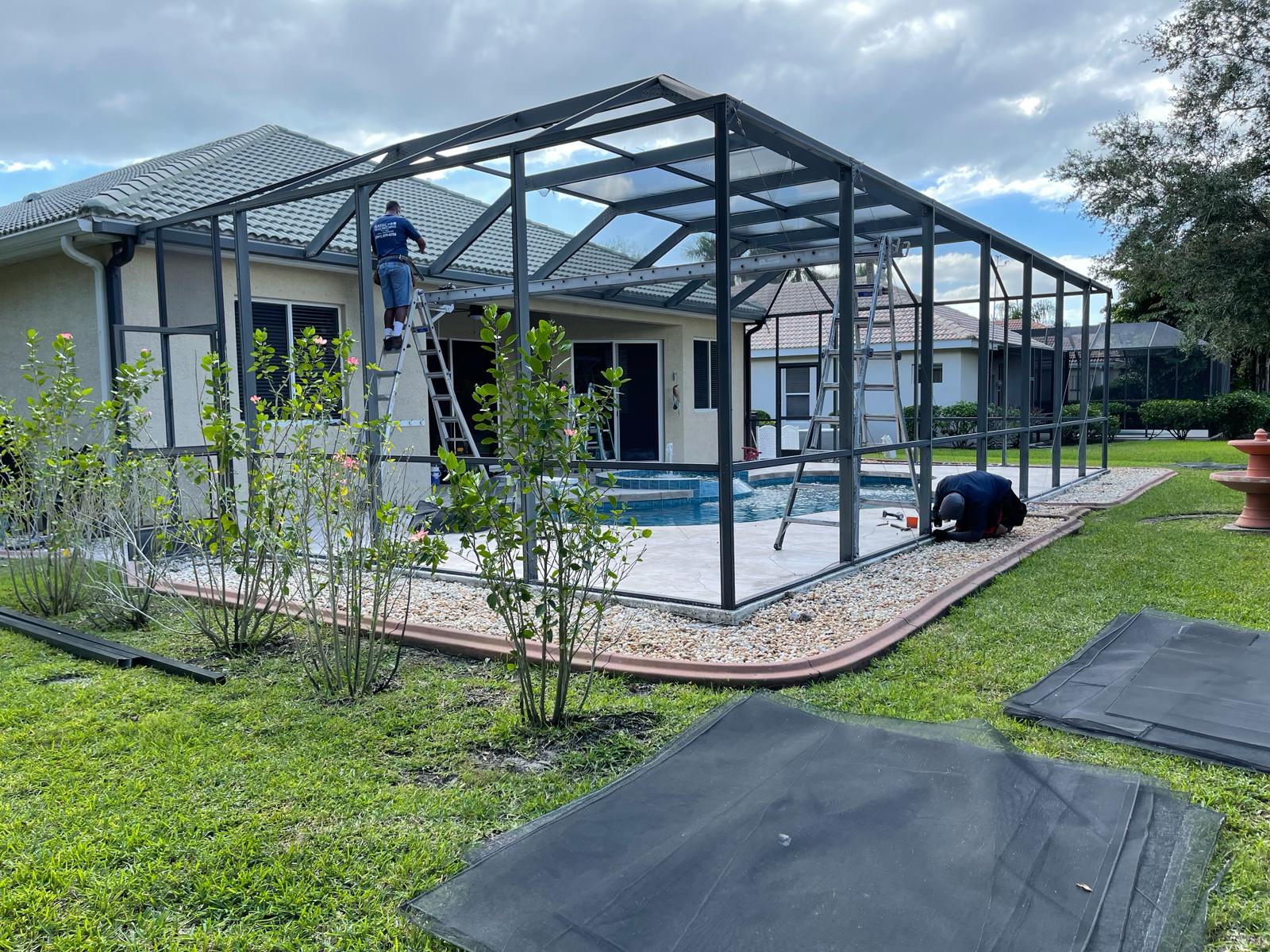
The rescreening process can take a few hours to several days. This timeframe depends on the size of the enclosure and the extent of damage. It involves removing the old screen and replacing it with new material. Common materials available for rescreening include fiberglass, aluminum, and durable polyester. Some people choose solar screens to reduce heat.
Rescreening is generally best left to professionals. They can ensure the job is done correctly and safely. Professionals also check the structural integrity of the aluminum frame and provide peace of mind that the enclosure is in perfect condition.
Preparing for Rescreening
Before rescreening, it’s essential to maintain the pool enclosure regularly. If the screen is over 10 years old, timely rescreening will ensure optimal protection and appearance. A high-quality rescreening job restores the barrier against pesky insects and other uninvited guests. This reduces the need for chemical treatments, making your outdoor space a safer environment.
Upgrading to modern screen technology can also improve the aesthetic appeal of your outdoor living space. This enhances both privacy and functionality. High-quality screens like Phifer add longevity and significantly reduce repair costs. Screen enclosures help keep bugs and debris out, lowering maintenance and allowing more time to enjoy your outdoor living space.
DIY vs. Professional Services
DIY rescreening can help save money, but it requires specific skills and tools. While some homeowners find satisfaction in doing it themselves, hiring professional screen services is often the smarter move. Professionals ensure the aluminum structure is sound and install the new screens without gaps or imperfections.
In regions with a humid climate, such as Florida, professional services are especially recommended. They ensure the rescreening project meets environmental standards and gives lasting results. This investment adds to the curb appeal and practical benefits of a well-maintained pool cage.
Timelines and Expectations
Continuous sun exposure can degrade screens, creating the need for periodic replacements. Timely maintenance and upgrades go a long way in preventing costly repairs. Rescreening not only restores the appearance of your pool screen enclosure but also extends the life of your pool’s mechanical components.
A well-maintained pool enclosure improves safety and privacy. It enhances the curb appeal and overall outdoor living experience. Investing in a rescreening service ensures your outdoor space remains in top condition. This adds value not just to the pool area but also to the entire outdoor living space.
Maintenance Tips for Pool Enclosures
Keeping your pool enclosure in perfect condition is essential for maintaining an enjoyable outdoor space. Not only does it protect against pesky insects and debris, but it also offers significant practical benefits for your outdoor living experience. Regular maintenance, including rescreening, can prevent costly repairs and enhance the aesthetic appeal of your pool screen enclosure.
Regular Inspections
To prolong the life of your pool enclosure, regular inspections are key. Check for any signs of damage or wear in the pool screens and aluminum structure. This will not only maintain functionality but also ensure a safe environment. Regular checks help identify any tears or weak spots that could let uninvited guests, such as pests, enter. Keeping the screen enclosure in a well-maintained condition is crucial for both curb appeal and peace of mind.
Cleaning Recommendations
Cleaning your pool cage is vital for maintaining its aesthetic appeal and functional performance. Use a mild soap and water solution with a soft brush to gently clean the screens. This method effectively removes dirt and pollen without damaging the screen material. Regular cleaning reduces debris accumulation, easing the strain on your pool’s filtration system and lowering overall maintenance costs.
Seasonal Preparedness
Seasonal changes can affect your outdoor living experience, but a well-maintained pool enclosure can help. These structures act as a barrier against cooler winds, allowing for year-round swimming enjoyment. They also provide UV protection, reducing the risk of sunburn for children. By keeping leaves and debris out, pool enclosures decrease the effort needed for maintenance and ensure a clean and safe environment for leisure activities year-round.
Investing in regular inspections, effective cleaning practices, and seasonal preparedness contributes to a smart investment. This approach not only enhances the enjoyment of your outdoor living space but also prolongs the lifespan of your pool screen enclosure, safeguarding your investment against costly repairs.
Conclusion and Recommendations
In conclusion, rescreening your pool and patio is a smart investment for maximizing your outdoor living space. It enhances both the aesthetic appeal and the practical benefits of your pool screen enclosure. Regular rescreening ensures your pool cage remains in perfect condition, preventing costly repairs and maintaining the aluminum structure’s integrity.
By investing in a well-maintained pool enclosure, you gain peace of mind. It creates a safe environment for families, especially those with children or pets, by acting as a barrier against uninvited guests and pesky insects. This protection minimizes the need for regular maintenance, allowing you to enjoy your outdoor experience more fully.
For pool owners in humid climates, a high-quality screen material that Daniels Screen Services or Screen Builders offer is essential. It offers a durable barrier against both debris and bothersome bugs. Maintaining your screen enclosure can also reduce the need for harsh pool chemicals, conserving water and being more environmentally friendly.
Recommendations:
- Schedule regular rescreening to maintain your screen enclosures.
- Use quality screen materials for lasting benefits.
- Consider rescreening an essential part of your outdoor living experience and overall investment in your home’s value and curb appeal.
Investing in rescreening ensures an enjoyable and safe outdoor living space.