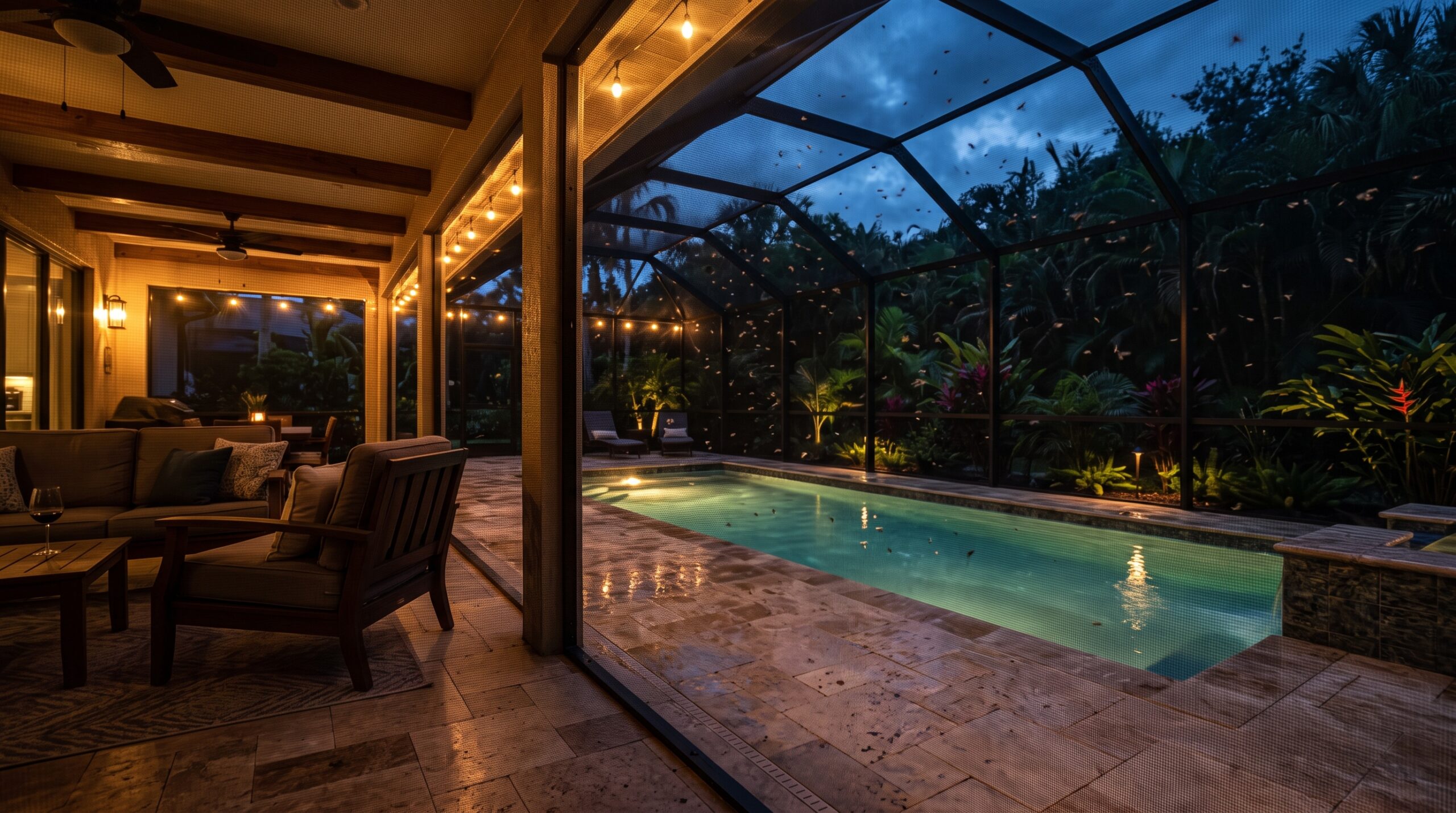
If you live in Florida, you’ve likely experienced it: You’re relaxing on your lanai at sunset, seemingly protected by your screen, only to find yourself covered in tiny, itchy bites the next morning.
The culprit? No-see-ums (also known as midges or sandflies). These pests are small enough to fly right through standard pool cage screening. In this guide, we’ll explain the science of mesh sizes and help you choose the right “shield” to keep your outdoor living space truly bug-free.
The “Mesh Count” Mystery: 18×14 vs. 20×20
When professionals talk about screen mesh, they use numbers like “18×14.” This refers to the number of openings per linear inch.
- Standard Mesh (18×14): This is the industry standard for most Florida pool cages. It’s excellent for airflow and keeps out larger pests like mosquitoes, wasps, and beetles. However, its openings are large enough for tiny “no-see-ums” to squeeze through.
- No-See-Um Mesh (20×20): This is a much tighter weave. With 20 openings in each direction, the holes are significantly smaller, creating a barrier that even the tiniest Florida gnats cannot penetrate.
Why the “No-See-Um” Mesh Upgrade is a Game Changer
In coastal areas or homes near standing water, mangroves, or dense vegetation, standard screening simply isn’t enough. Here is why homeowners are switching to a tighter weave:
1. True Sunset Protection
No-see-ums are most active at dawn and dusk—the exact times you want to enjoy your patio. 20×20 mesh ensures that “golden hour” stays relaxing, not itchy.
2. Reduced Debris
Because the weave is tighter, it doesn’t just block bugs; it also filters out more pine needles, fine dirt, and smaller seeds that usually blow through standard screens and end up in your pool.
3. Increased Privacy
While you can still see out clearly, the tighter weave of a 20×20 mesh offers a slightly higher level of daytime privacy than standard screening, making your lanai feel more like a secluded oasis.
Will a Tighter Mesh Block My Airflow?
This is the most common concern. While a 20×20 mesh is tighter, modern materials like Phifer No-See-Um Screen are designed to maintain a comfortable breeze.
In the heat of a Florida summer, you will still feel the air movement. Most homeowners find that the trade-off—losing a tiny percentage of airflow in exchange for 100% protection from biting insects—is well worth it.
Strategic Installation: The “Hybrid” Approach
You don’t always have to rescreen the entire cage with No-See-Um mesh. At Classic Rescreening, we often recommend a hybrid strategy to help clients maximize their budget:
- Lower Walls: Install 20×20 No-See-Um mesh on the walls where you sit and where bugs are most likely to enter.
- Roof Panels: Use standard 18×14 mesh on the overhead panels to maximize airflow and keep costs lower.
Is it Time for an Upgrade?
If you find yourself retreating indoors as soon as the sun starts to set, your current screen isn’t doing its job. Upgrading to a specialized mesh is one of the most effective ways to reclaim your backyard and increase the “usable hours” of your home.
Classic Rescreening offers the full line of Phifer specialty meshes, including the 20×20 No-See-Um protection. Let’s build a barrier that actually works.