Bradenton homeowners with riverfront properties enjoy beautiful water views, warm Florida weather, and the opportunity to use their pool cages and screened lanais throughout much of the year. A well-maintained enclosure can make outdoor living more comfortable by helping reduce exposure to insects, debris, and direct sunlight.
However, riverfront properties may experience additional wear from humidity, moisture, wind, rain, vegetation, and exposure to the surrounding environment. Over time, screen mesh can tear, aluminum frames can lose their finish, fasteners can deteriorate, and doors may become difficult to operate.
Professional pool cage rescreening and enclosure maintenance can help restore the appearance and function of a Bradenton riverfront lanai.
Why Riverfront Pool Cages Require Special Attention
A pool cage near the Manatee River, Braden River, or another waterfront area is exposed to outdoor conditions every day. Moisture and wind may affect the enclosure differently depending on the property’s location, landscaping, drainage, and distance from the water.
Common environmental factors include:
- High humidity
- Wind coming from open water
- Heavy rain
- Salt or mineral residue
- Pool splash-out
- Irrigation overspray
- Sun exposure
- Leaves and branches
- Airborne debris
- Moisture near the enclosure base
These conditions do not automatically mean that a pool cage will experience serious damage. However, regular inspections can help identify deterioration before it affects a larger area.
Common Problems in Bradenton Riverfront Screen Enclosures
Torn Screen Panels
Screen panels may be damaged by wind, branches, pets, outdoor furniture, lawn equipment, or general deterioration.
Small tears can expand when exposed to repeated wind and contact. Lower panels and areas near landscaping often experience more frequent damage.
Loose or Sagging Mesh
Screen mesh may lose tension over time or pull away from the frame if the spline becomes loose. Sagging panels can affect the appearance of the enclosure and may create openings for insects and debris.
Faded or Brittle Screens
Continuous sun exposure can cause screen material to fade and become less flexible. Brittle mesh may tear more easily during cleaning, storms, or routine contact.
Corroded or Discolored Fasteners
Fasteners may develop visible staining or corrosion, especially in areas exposed to moisture. The condition of the surrounding connection should be evaluated before replacing individual screws.
Damaged Screen Doors
A door that drags, sticks, or fails to close completely can create a permanent opening in the enclosure. Hinges, latches, closers, handles, sweeps, and door mesh may all require inspection.
Frame Movement or Damage
Wind, impact, age, and loose connections may affect aluminum frame sections. New screen mesh should be installed only after the structure has been checked for alignment and stability.
How Riverfront Conditions Can Affect the Enclosure
Humidity and Moisture
High humidity can contribute to residue, staining, and deterioration of certain components. Moisture that remains near the base of the enclosure may also affect fasteners and surrounding surfaces.
Wind
Open waterfront areas may receive stronger or more consistent wind exposure than properties protected by dense buildings or landscaping. Wind can place stress on loose screens, damaged spline, doors, and weakened frame sections.
Rain and Runoff
Heavy rain may expose drainage problems near the pool deck or enclosure base. Persistent water accumulation should be evaluated because it can contribute to staining and recurring maintenance issues.
Vegetation and Debris
Trees, palms, vines, and dense plants may rub against the screen or drop leaves and branches onto the enclosure. Maintaining reasonable clearance can help reduce contact and make inspections easier.
Pool Chemicals and Splash-Out
Pool water and chemicals may reach nearby aluminum or hardware through splash-out, cleaning, or wind. Appropriate maintenance and rinsing may help preserve the appearance of the enclosure, depending on the materials involved.
When Should a Bradenton Riverfront Home Be Rescreened?
Full rescreening may be worth considering when:
- Several panels are torn
- The mesh is brittle throughout the cage
- The screen color is inconsistent
- Previous repairs are highly visible
- Multiple panels are loose or sagging
- Insects enter through several areas
- You want to upgrade the mesh material
- The frame is being painted at the same time
- The enclosure has not been maintained for many years
- Repeated repairs have not produced a lasting result
Rescreening the entire enclosure can create a more uniform appearance and allows a contractor to inspect the screen channels, doors, frame, and hardware as part of one project.
When Is a Single-Panel Repair Enough?
A targeted repair may be appropriate when:
- Only one or two panels are damaged
- The remaining mesh is in good condition
- The screen color remains consistent
- The frame is straight and stable
- Spline channels are intact
- The door operates properly
- There are no widespread gaps or signs of deterioration
A professional can compare the condition of the existing screen with the expected result of a partial repair. In some cases, replacing one panel may create a noticeable difference in color or texture.
Choosing Screen Mesh for a Riverfront Property
Standard Fiberglass Mesh
Standard fiberglass screening may be suitable for homeowners who prioritize airflow, visibility, and basic insect protection.
It may be a practical choice for sections that do not receive frequent contact or heavy debris exposure.
High-Visibility Screen
High-visibility mesh may be considered when preserving a river, garden, or waterfront view is a primary goal. Homeowners should review samples in outdoor light because the appearance can vary depending on the background and time of day.
No-See-Um Mesh
A tighter mesh may help reduce the entry of smaller flying insects. It may be appropriate for selected areas or the entire enclosure, depending on the homeowner’s priorities.
Before choosing no-see-um screening, consider:
- Outward visibility
- Airflow
- Light transmission
- Local insect conditions
- Cleaning requirements
- The condition of the existing frame
Heavy-Duty Polyester Mesh
Heavy-duty mesh may be suitable for areas that receive repeated contact from pets, children, furniture, or debris.
Potential applications include:
- Lower wall panels
- Door sections
- Pet-accessible areas
- High-traffic walkways
- Sections near landscaping
- Panels that have required repeated repairs
Privacy Panels
Florida Glass or other privacy materials may be considered for selected lower sections. These panels may provide additional privacy or help reduce certain types of splash and debris.
They are not the same as insect mesh and may affect airflow and visibility differently.
Preserving a Bradenton Riverfront View
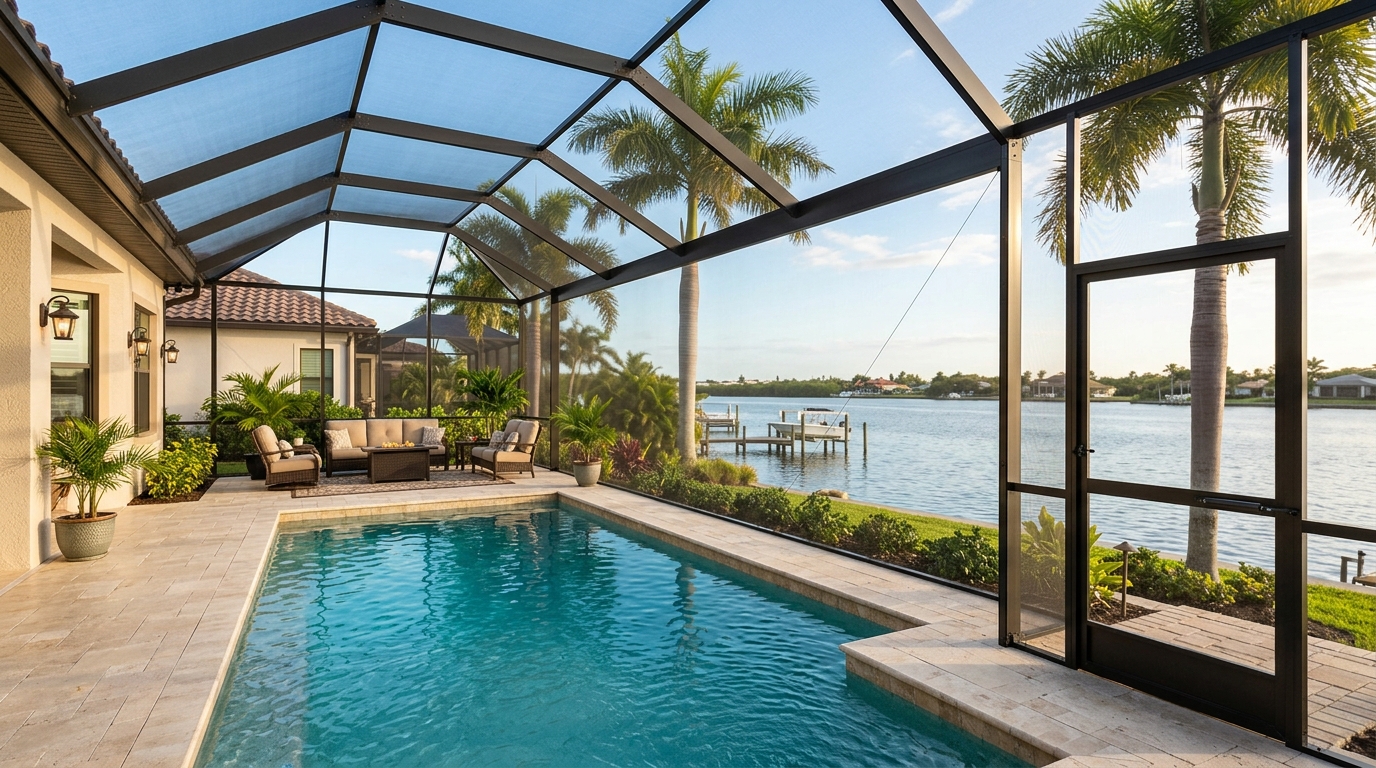
For many riverfront homeowners, the view is one of the most important features of the property. The screen enclosure should provide protection without unnecessarily distracting from the landscape.
To help preserve visibility, consider:
- Choosing a mesh appropriate for the desired view
- Reviewing samples outdoors
- Selecting a frame color that complements the background
- Replacing mismatched or heavily patched panels
- Keeping landscaping properly trimmed
- Cleaning dust, pollen, and residue from the screen
- Repairing sagging mesh
- Maintaining a properly aligned door
The final appearance also depends on lighting, viewing distance, background contrast, and the design of the aluminum frame.
Inspecting the Aluminum Frame
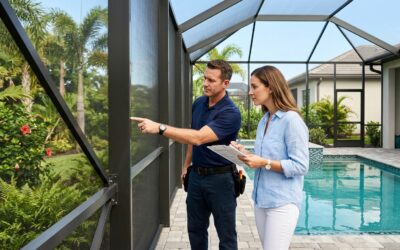
Screen mesh is only one part of the enclosure. Before rescreening, a contractor should evaluate the condition of the frame.
Inspect for:
- Bent posts
- Loose horizontal sections
- Damaged corners
- Frame movement
- Separation near the base
- Deteriorated spline channels
- Corroded fasteners
- Roof section damage
- Door frame misalignment
- Signs of impact or storm damage
If the frame is unstable or improperly aligned, new mesh may not remain tight or perform as expected.
Riverfront Fasteners and Hardware
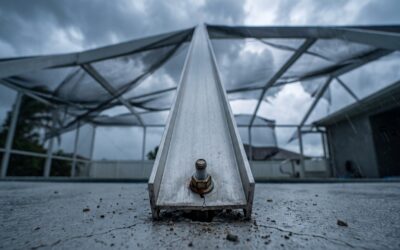
Fasteners secure the enclosure’s frame, base connections, doors, and other components. Moisture and environmental exposure can affect the appearance and condition of this hardware over time.
Look for:
- Rust-colored staining
- Dark or discolored screws
- Missing fasteners
- Loose connections
- Deterioration around the base
- Corrosion near the door
- Movement around corners and roof intersections
Replacing one visible screw may not address the underlying problem. The surrounding connection should be evaluated before hardware work is completed.
Maintaining the Screen Door
A screen door is frequently used and may require more attention than other areas of the enclosure.
Check whether the door:
- Closes completely
- Latches securely
- Remains aligned
- Has a working closer
- Moves without dragging
- Has an intact sweep
- Contains tight, undamaged mesh
- Remains secure in windy conditions
Possible repairs may include:
- Door rescreening
- Hinge replacement
- Closer adjustment or replacement
- Latch repair
- Handle replacement
- Sweep installation
- Frame alignment
- Door replacement, when necessary
A properly functioning door can help reduce gaps and improve everyday comfort inside the lanai.
Preparing a Riverfront Pool Cage for Severe Weather
A pool cage cannot be guaranteed to withstand every storm or extreme weather event. However, routine maintenance can help identify visible weaknesses.
Before severe weather, homeowners may consider:
- Removing or securing outdoor furniture
- Storing umbrellas and lightweight decorations
- Bringing in loose planters
- Closing and securing screen doors
- Checking for torn or loose panels
- Trimming branches near the enclosure
- Clearing gutters and drainage areas
- Photographing the existing condition
After a storm, inspect the enclosure from a safe position. Do not climb on the roof or touch unstable structural components.
Drainage Around a Riverfront Enclosure
Water that remains near the pool cage base may contribute to staining and recurring maintenance problems. During or after heavy rain, look for:
- Standing water near posts
- Clogged deck drains
- Overflowing gutters
- Downspouts discharging near the enclosure
- Irrigation overspray
- Low areas around the foundation
- Soil or mulch touching the frame
The appropriate solution depends on the cause. Drainage, roofing, landscaping, or construction professionals may be needed for problems outside the scope of screen enclosure work.
Painting a Bradenton Pool Cage
A faded, chalky, or inconsistent frame finish can affect the appearance of a riverfront outdoor space. In some cases, professional cleaning, preparation, and painting can refresh the aluminum.
Before painting, inspect for:
- Active corrosion
- Bent aluminum
- Loose connections
- Damaged screen channels
- Deteriorated coating
- Worn fasteners
- Door alignment problems
- Moisture-related staining
Painting should not be used to hide structural deterioration. Repairs and surface preparation should be completed before a new finish is applied.
Homeowners should also review any neighborhood, condominium, or association requirements before changing the color of the enclosure.
Common Rescreening Mistakes
Choosing Mesh Based Only on Price
The least expensive material may not be the best choice for a riverfront property with pets, strong wind exposure, small insects, or a high-value view.
Installing the Same Mesh Everywhere
Different sections may have different needs. A combination of high-visibility, heavy-duty, no-see-um, and privacy materials may be more practical.
Ignoring the Frame
New screen mesh cannot correct bent aluminum, loose connections, or damaged spline channels.
Forgetting the Door
A poorly functioning door can leave an opening even after the rest of the enclosure has been rescreened.
Delaying Small Repairs
Torn mesh and loose spline may deteriorate further when exposed to wind and rain. Early repairs can help prevent additional damage.
Using Harsh Cleaning Methods
Abrasive tools or excessive pressure may damage older screen mesh and finishes. Cleaning should be appropriate for the materials being maintained.
When to Contact a Pool Cage Professional
A professional evaluation may be appropriate when:
- Multiple screens are damaged
- The enclosure has visible frame movement
- Fasteners are corroded or missing
- The door does not close correctly
- The roof screen appears damaged
- The mesh is brittle or faded
- You want to preserve a waterfront view
- You are considering no-see-um or heavy-duty mesh
- The frame needs painting
- Previous repairs have not lasted
- A storm or branch has affected the enclosure
A contractor can help determine whether the best solution is a panel repair, full rescreening, door repair, hardware replacement, frame painting, or a broader restoration.
Maintain Your Bradenton Riverfront Outdoor Space
A well-maintained pool cage can help Bradenton homeowners enjoy their riverfront property with greater comfort and confidence. The right combination of screen mesh, frame maintenance, door repairs, hardware inspection, and landscaping care can improve the appearance and function of the enclosure.
Classic Rescreening can evaluate pool cages, lanais, patios, and screened porches in Bradenton, Florida. Services may include screen repair, complete rescreening, high-visibility mesh, heavy-duty screening, no-see-um mesh, door repairs, frame painting, fastener replacement, and enclosure restoration.