Buying a home with a pool cage can be an exciting step—especially in Florida, where screened pool enclosures help homeowners enjoy outdoor living with greater comfort, privacy, and protection from insects and debris.
But before closing on a property, it is important to look beyond the pool itself. The condition of the screen enclosure can affect safety, maintenance needs, appearance, and future repair costs.
A pool cage may look fine at first glance while hiding torn screens, rusted fasteners, loose framing, damaged doors, or signs of storm wear. A careful inspection before closing helps buyers understand what they are purchasing and whether the enclosure may need repair, rescreening, repainting, or a more extensive restoration.
Use this pool cage inspection checklist to identify potential concerns before finalizing your Florida home purchase.
Why Inspect the Pool Cage Before Buying a Florida Home?
A pool enclosure is exposed to Florida’s sun, humidity, rain, wind, salt air in coastal areas, and seasonal storms. Over time, those conditions can wear down screen mesh, fasteners, paint finishes, doors, and structural components.
Inspecting the enclosure before closing can help you:
- Identify visible damage or deferred maintenance
- Estimate potential repair or rescreening needs
- Spot issues that could affect safety or usability
- Ask informed questions during the buying process
- Plan a renovation budget after moving in
- Avoid discovering costly problems after closing
A professional pool cage assessment can also help distinguish between a minor cosmetic issue and a condition that may require more comprehensive work.
- Check the Condition of the Screen Mesh
The screen mesh is one of the most visible parts of any pool enclosure—and often the first component to show age or damage.
Walk around the enclosure and look for:
- Tears, holes, or punctures
- Loose or sagging panels
- Frayed edges around the frame
- Screens pulling away from the spline channel
- Faded, brittle, or discolored mesh
- Areas patched with mismatched materials
- Evidence of pet damage or pressure against the screen
Even small openings can allow mosquitoes, no-see-ums, leaves, and other pests into the pool area. Multiple damaged panels may indicate that the enclosure is approaching the point where full rescreening is more practical than repeated spot repairs.
Questions to Ask
- When was the enclosure last rescreened?
- Was the same mesh installed throughout the cage?
- Are any screen panels currently loose or damaged?
- Has the enclosure been repaired after a storm?
- Inspect the Aluminum Frame for Damage or Movement
The aluminum frame provides the structure that supports the entire pool cage. While aluminum is commonly used because it is lightweight and durable, it should still be checked carefully for damage, corrosion, or signs of movement.
Look for:
- Bent or dented frame members
- Cracks near joints or connection points
- Warped beams or uneven lines
- Loose crossbars
- Visible separation between frame sections
- Corrosion near the base or around fasteners
- Damage caused by fallen branches or storm debris
A frame that appears uneven, loose, or visibly damaged deserves professional attention. Structural concerns should never be treated as a simple screen replacement issue.
- Look Closely at Screws, Fasteners, and Hardware
Fasteners may be small, but they play a major role in the safety and stability of a pool enclosure. Florida humidity and coastal air can contribute to corrosion, especially on older cages or properties near the water.
Check for:
- Rusted or discolored screws
- Missing fasteners
- Screws that appear loose or raised
- Corrosion around attachment points
- Hardware that looks inconsistent or recently patched
- White oxidation or staining around metal components
In coastal communities, corrosion can develop more quickly due to salt exposure. Replacing deteriorated fasteners can be an important preventive maintenance step to help protect the enclosure’s long-term condition.
- Test Every Pool Cage Door
A screen enclosure door should open, close, latch, and self-close properly. A malfunctioning door can create a daily inconvenience, reduce security, and allow bugs or debris into the lanai.
During your walkthrough, test all accessible enclosure doors and check for:
- Doors dragging on the ground
- Hinges that squeak, bind, or appear rusted
- Doors that do not close completely
- Broken or weak handles
- Damaged closers
- Gaps around the frame
- Torn screen panels in the door itself
- A latch that does not engage securely
Door issues are often repairable, but they should be noted before closing—particularly if several components are worn at the same time.
- Examine the Paint Finish and Overall Appearance
A faded or peeling finish does not always mean the enclosure has a structural issue. However, it can affect curb appeal, indicate long-term exposure, and signal that the cage may benefit from restoration.
Watch for:
- Chipping or peeling paint
- Powdery oxidation on the aluminum
- Fading from white to a dull gray or yellowed appearance
- Uneven color from previous touch-ups
- Black streaks, mildew, or algae buildup
- Surface corrosion around screws and joints
If the frame is still in good condition, professional pool cage painting may help refresh the appearance of the enclosure without replacing the entire structure. Modern finishes, including bronze and black, can also give an older pool area a more updated look.
- Inspect the Base of the Pool Cage
The lower section of the enclosure is especially important because it connects the cage to the deck, foundation, or surrounding structure.
Look for:
- Gaps at the base of the frame
- Loose anchors or attachment points
- Signs of water pooling near the enclosure
- Cracked deck surfaces around frame connections
- Corrosion or staining near the bottom rails
- Soil erosion near the perimeter
- Damage from landscaping equipment
Water management matters. Persistent standing water, poor drainage, or moisture collecting around the base may contribute to staining, algae growth, and accelerated wear over time.
- Check for Signs of Storm Damage
Florida weather can be hard on pool enclosures. Even if a cage remains standing after a storm, it may have suffered damage that is not immediately obvious.
Look for:
- Bent roof panels or beams
- Loose screens after high winds
- Debris impact marks
- Panels that no longer align properly
- Damaged gutters or roof connections
- New cracks, gaps, or shifted framing
- Repairs that appear temporary
Ask the seller whether the property has experienced major storm damage and whether repairs were completed by a qualified professional. If recent work was performed, request any available documentation for your records.
- Consider the Type of Screen Installed
Not all pool screen materials provide the same level of visibility, insect protection, durability, or pet resistance.
Depending on your lifestyle and location, you may want to ask about the existing mesh and whether it meets your needs.
Common considerations include:
- Standard screen mesh for basic insect and debris protection
- No-see-um mesh for smaller insects
- Pet-resistant screen options for homes with dogs or cats
- Florida Glass for more privacy and protection in selected lower panels
- Stronger screen materials for high-traffic areas
If the current mesh is damaged or outdated, buying the home may be an opportunity to upgrade the enclosure during a full rescreening project.
- Look for Algae, Mildew, and Moisture Problems
Florida’s warm and humid climate can create ideal conditions for algae, mildew, and surface staining—especially in shaded lanais and pool areas with limited airflow.
Check for:
- Green buildup on lower screens
- Dark streaks on the frame
- Mildew near roof sections or gutters
- Staining where the cage meets the deck
- Excessive debris trapped in corners
- Moisture around the pool enclosure base
Cleaning can improve appearance, but recurring buildup may indicate drainage, landscaping, shade, or maintenance issues that should be addressed after purchase.
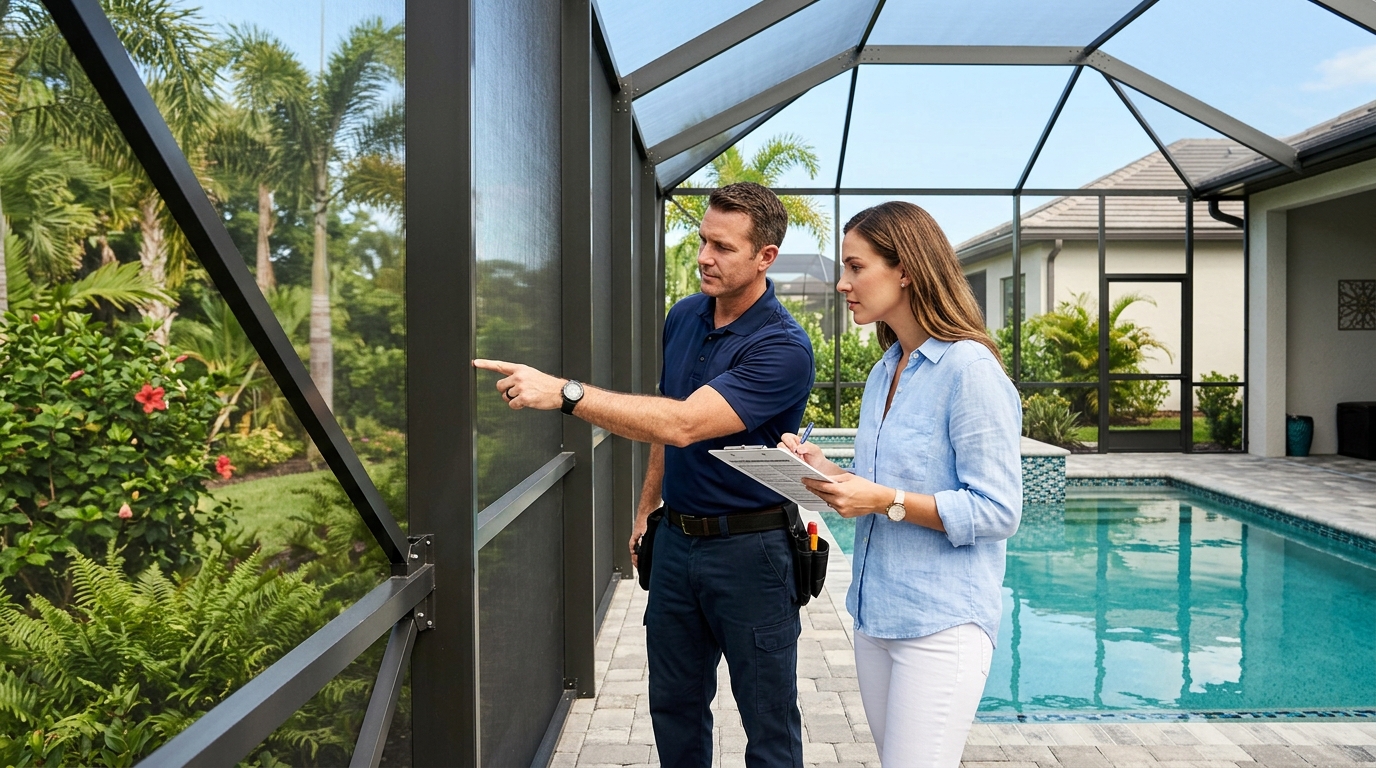
- Request a Professional Pool Cage Evaluation When Needed
A buyer’s general home inspection may identify obvious concerns, but a pool cage specialist can provide a more focused evaluation of the enclosure’s screens, fasteners, frame, doors, paint condition, and repair options.
Consider scheduling a professional evaluation if you notice:
- Several torn or loose screen panels
- Widespread rust or corrosion
- Structural movement or visible bending
- A heavily faded or oxidized frame
- Multiple door or hardware issues
- Signs of storm damage
- An enclosure that appears old or poorly maintained
This step can give you clearer information before closing and help you prioritize work after moving into the home.
Should You Avoid Buying a Home With a Damaged Pool Cage?
Not necessarily. Many pool cage concerns can be repaired or improved through services such as screen repair, full rescreening, fastener replacement, door repair, painting, or enclosure restoration.
The important factor is understanding the condition of the cage before you buy. A home with damaged screens may simply need routine maintenance. On the other hand, a cage with serious corrosion, storm damage, or structural concerns may require a more substantial investment.
A professional assessment helps you make that distinction with greater confidence.
Make Your Florida Pool Area Ready for Enjoyment
A pool cage is more than a feature in a backyard—it supports a cleaner, more comfortable, and more enjoyable outdoor living space. Before closing on a Florida home, take the time to inspect the enclosure carefully and document any concerns.
If the pool cage needs attention after your purchase, Classic Rescreening can help with professional rescreening, screen repair, pool cage painting, fastener replacement, and enclosure restoration solutions.
Contact Classic Rescreening to schedule a professional pool cage evaluation and prepare your new outdoor space for years of Florida living.