In Florida, a pool enclosure is more than just a bug barrier—it’s a structural addition to your home. After a major storm or hurricane, most homeowners look for torn screens, but the most dangerous damage is often invisible to the untrained eye.
A screen can be replaced in a day, but a compromised aluminum frame can lead to a total collapse during the next high-wind event. In this guide, we’ll show you how to perform a structural “health check” on your pool cage and why professional anchoring is the key to longevity in the Sunshine State.
Why “Screen Damage” is Only Half the Story
When hurricane-force winds hit a pool cage, the screens act like giant sails. This puts thousands of pounds of pressure on the aluminum beams, the internal cables, and the bolts holding the cage to your concrete deck. Even if the screens didn’t rip, the vibration and “pull” from the wind might have loosened the very foundation of the structure.
The 5-Point Structural Safety Checklist
1. The “Plumb” Test (Is it Leaning?)
Stand at one corner of your enclosure and look down the line of the main vertical posts.
- The Red Flag: If the cage looks like it’s leaning even an inch, or if the doors no longer latch perfectly, the structure has shifted. This indicates that the wind pressure was strong enough to bend the internal gusset plates or loosen the base mounts.
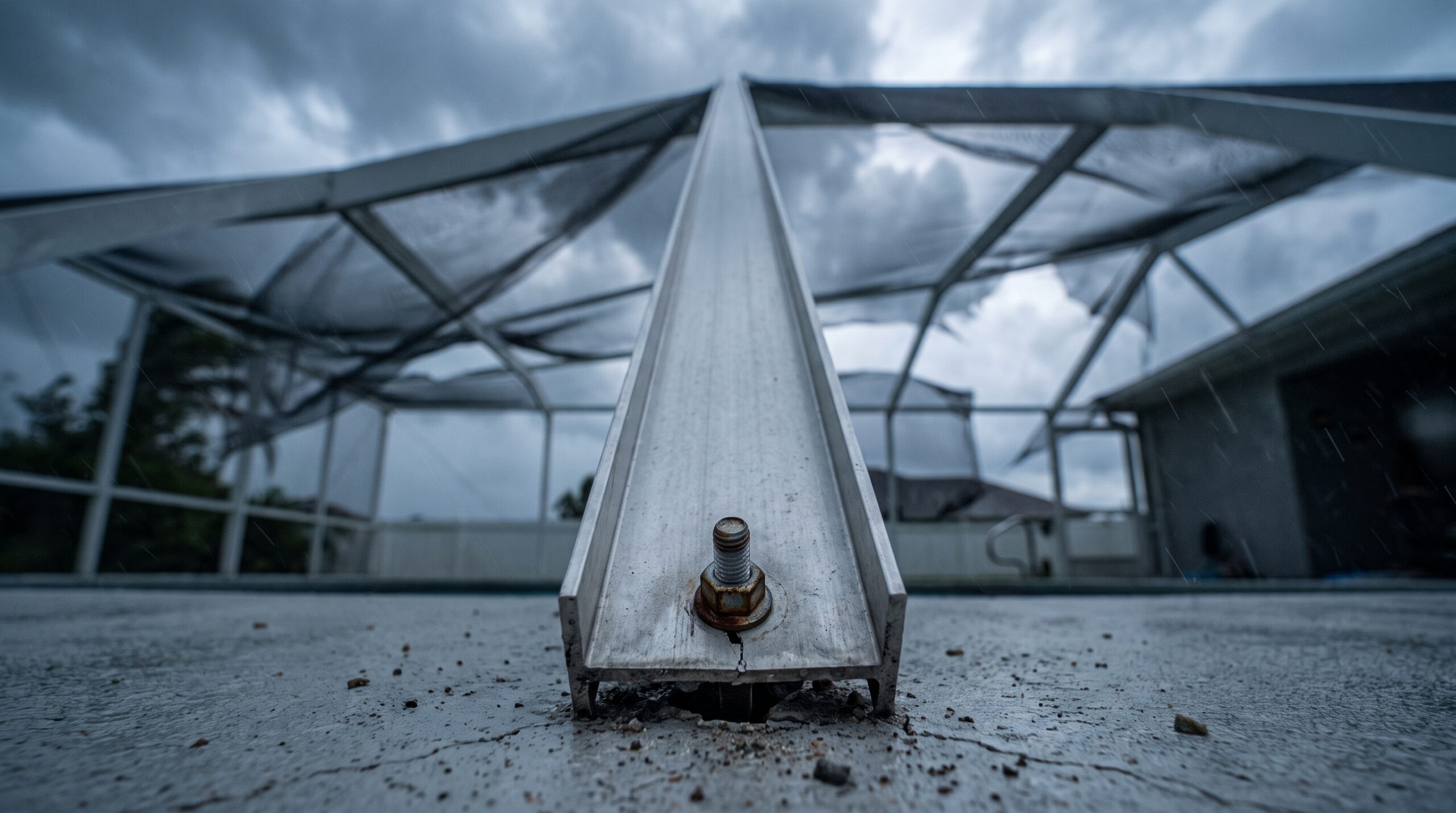
2. Anchor Bolt Inspection (The Foundation)
Examine the bolts (fasteners) at the bottom of every vertical post where they meet the concrete.
- The Red Flag: Look for bolts that are “backed out,” wiggly, or surrounded by cracked concrete. In older cages, these bolts are often zinc-plated and may have rusted through, meaning your cage is essentially “floating” on your deck rather than being anchored to it.
3. Safety Cable Tension
Most Florida pool cages use stainless steel safety cables (wind cables) at the corners to prevent swaying.
- The Red Flag: Touch the cables. They should be tight. If they are sagging, frayed, or the mounting hardware is pulled out of the aluminum, your cage has lost its primary defense against wind-sway.
4. Beam and Box-Gutter Connections
Look up at the “corners” where the roof meets the walls.
- The Red Flag: Check for gaps in the aluminum joints or “sheared” screws. If you see silver screws that look snapped or missing, the structural integrity of that joint is gone.
15. The “Shaker” Test
Grip a main vertical post (not a door frame) and give it a firm shake.
- The Red Flag: A healthy cage should feel stiff. If the whole structure rattles, sways, or makes a “metal-on-metal” clicking sound, the fasteners are loose throughout the system.
The Danger of Rusty Fasteners
In Florida’s humid, salty air, standard fasteners decay rapidly. If your cage is 5–10 years old and has never had a “bolt replacement” (also known as a “screw flipout”), your structure is likely at risk.
At Classic Rescreening, we prioritize replacing old, rusted zinc screws with Nylotec or Stainless Steel fasteners. These don’t just look better—they maintain their grip strength for decades, ensuring your cage stays rooted during the next tropical storm.
Why “Leaning” Cages Rarely Fix Themselves
If a cage is leaning, it means the aluminum has “reached its yield point.” Ignoring a shifted cage is a major liability. A collapsed cage can:
- Damage your roof line.
- Destroy your pool equipment.
- Void your homeowner’s insurance if it was determined that “deferred maintenance” (like rusted bolts) caused the collapse.
Professional Safety Tune-Ups: What We Do
If you aren’t sure about your cage’s safety, a professional inspection is the best ROI for your home. Our structural tune-up includes:
- Fastener Evaluation: Identifying which bolts are compromised.
- Cable Re-tensioning: Ensuring the “skeleton” of the cage is rigid.
- Painting & Sealing: Protecting the aluminum joints from future oxidation.
- Anchoring Check: Verifying the cage is properly tied into the footings.
Final Thoughts for Florida Homeowners
Don’t wait for your pool cage to end up in your neighbor’s yard—or in your pool. After storm season, or if your cage is over 7 years old, a structural integrity check is essential.
Classic Rescreening specializes in more than just mesh; we specialize in the safety and longevity of the entire enclosure. Schedule your structural safety inspection today.