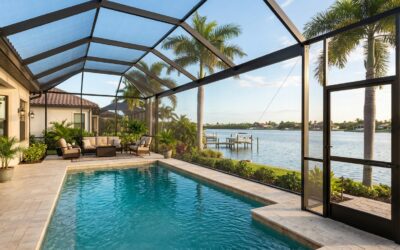
Living in Bradenton, Florida, offers a quintessential coastal lifestyle, but it comes with a unique set of challenges for homeowners. Your pool enclosure is not just a screen; it is a critical structural extension of your home. Faced with relentless Florida humidity, intense UV radiation, and the inevitable salt-air exposure from the Gulf, these aluminum structures endure significant stress daily. Many residents view their pool cage as a low-maintenance feature, but ignoring the physical warning signs of degradation can lead to structural failure, insurance complications, and safety hazards that extend to your home’s electrical system and property foundation. Protecting your investment requires a proactive mindset, recognizing that the lifespan of an enclosure depends entirely on how quickly you respond to signs of wear.
Understanding the Lifespan of Your Bradenton Pool Enclosure
Why the Florida Climate is Tough on Aluminum Structures
The Florida environment is arguably the most demanding climate in the United States for architectural aluminum. High humidity levels keep surfaces damp for extended periods, providing a constant catalyst for oxidation and corrosion. In Bradenton, the proximity to the coast introduces salt-laden air, which actively accelerates the degradation of painted aluminum finishes and metal fasteners. When this moisture infiltrates joints or settles near the base of the structure, it creates the perfect breeding ground for mold and mildew, which can eventually track back to your home’s roofline or siding.
The Importance of Regular Inspections for Your Investment
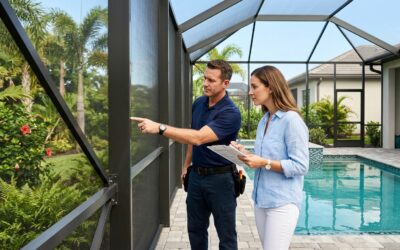
Think of your pool cage as a roof extension. Just as you perform periodic checks on your home’s shingles, a routine inspection of your pool cage is vital to maintaining your property value. A professional assessment can identify minor issues, such as a loose screw or a small tear in the mesh, before they evolve into significant structural liabilities. Because pool cages are often excluded from standard home insurance policies—or require specific wind-load riders—a well-maintained cage is your best defense against potential claims denials during storm season.
Sign 1: Sagging or Brittle Screen Mesh
 Comparison of a healthy screen and spline versus one suffering from UV degradation, ‘silvering,’ and spline failure.
Recognizing UV Degradation and “Silvering”
Over time, the harsh Florida sun breaks down the chemical bonds in the PVC-coated fiberglass mesh of your pool screen. You will often notice this through a phenomenon called “silvering,” where the screen loses its deep color and begins to look faded or metallic. Once the coating fails, the mesh becomes brittle to the touch. If you poke the screen and it feels like dry parchment rather than flexible fabric, the structural integrity is gone, and the mesh is likely to fail under the pressure of even moderate winds.
The Danger of Spline Failure and Loose Panels
The spline is the rubber or vinyl cord that secures the screen into the aluminum frame. As the mesh ages and shrinks, it pulls against the spline, eventually causing it to pop out of the track. Once the spline fails, the panel hangs loose, creating a “sail” effect during windy weather. This not only makes the cage look neglected but also invites pests, debris, and potential hazards into your pool area.
Why Torn Screens Are More Than Just an Eyesore: Pest and Debris Control
A torn screen is an open invitation for Florida’s local wildlife, including insects and small reptiles, to compromise your swimming environment. Furthermore, debris—such as palm fronds or tree branches—can easily pierce through a weakened screen, causing impact damage to the cage’s internal frame. Keeping screens intact is essential for preventing the accumulation of organic matter, which can clog your pool’s drainage system and lead to costly maintenance down the line.
Sign 2: Rusty or Corroded Fasteners (The “Bleeding” Effect)
The Difference Between Standard and Stainless Steel Fasteners
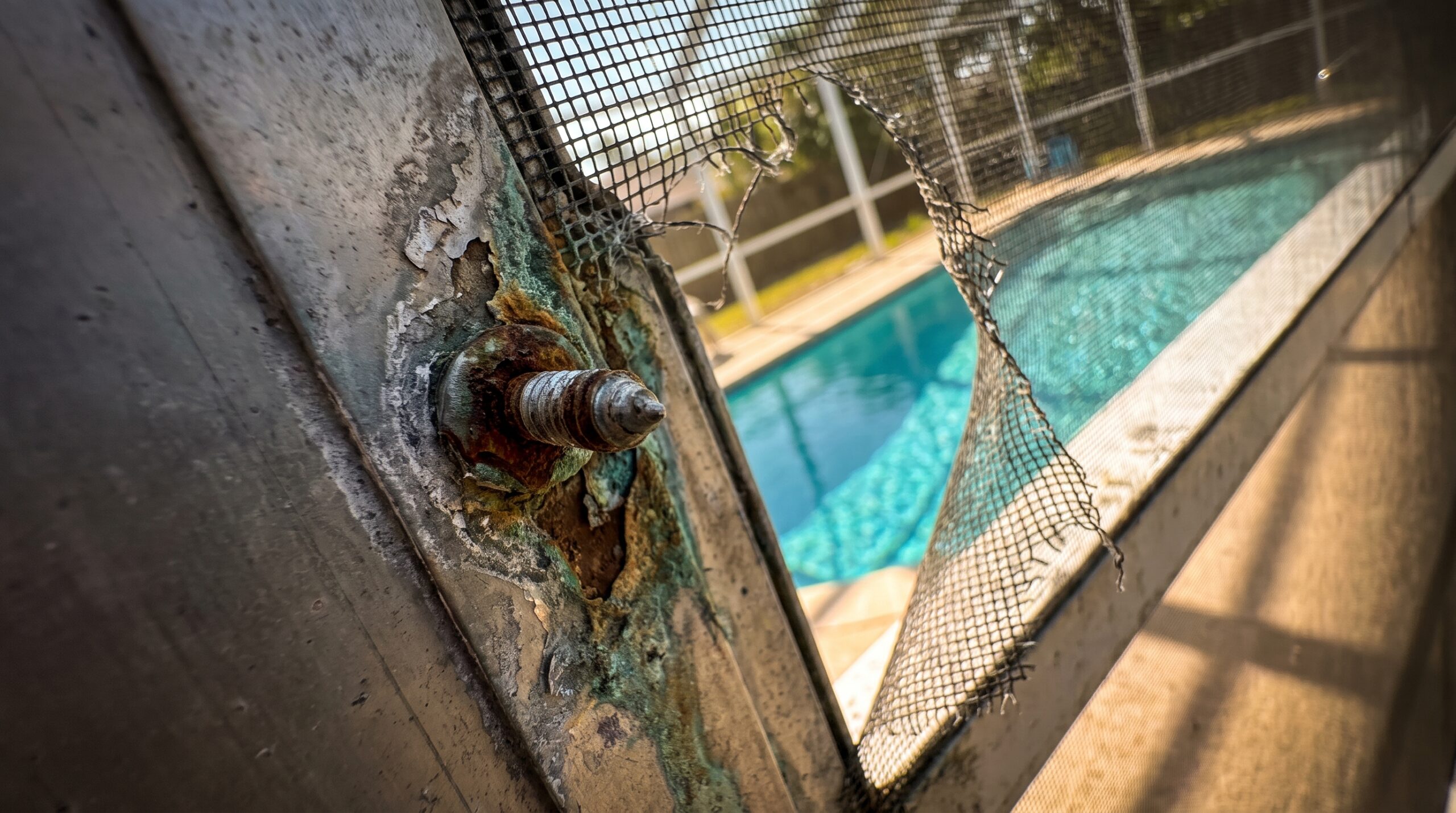
Many older pool cages were installed using basic galvanized steel screws. In the aggressive humidity of Bradenton, these fasteners will inevitably rust. You can spot this by the orange, streaky “bleeding” effect dripping down the aluminum beams. True protection requires high-grade stainless steel or ceramic-coated fasteners. If your cage is still using the original non-coated screws, they are essentially ticking time bombs for structural fatigue.
How Corroded Screws Compromise Structural Integrity
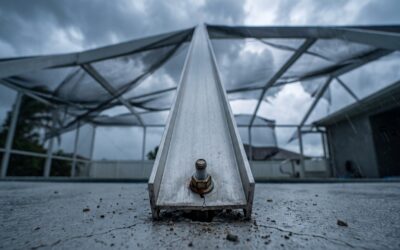
When a screw corrodes, it loses its “bite” into the aluminum, creating a gap between the structural members. This vibration-prone connection weakens the entire grid of the cage. Even if the aluminum itself looks pristine, the connections are where the cage will fail during a wind event.
Warning Level: Why Rusty Fasteners are a Critical Safety Hazard
Rusty screws are not just a cosmetic issue; they are a sign that the structural foundation of your cage is failing. A loose connection shifts the load-bearing requirements to adjacent fasteners, which were never intended to carry that weight. This creates a chain reaction of failure that can turn your enclosure into a safety liability for your family and property.
Sign 3: White Chalky Residue and Aluminum Oxidation
What Aluminum Oxidation Means for Your Cage’s Longevity
Aluminum does not rust like steel, but it does oxidize. This presents as a white, chalky powder on the frame. While it is a surface-level chemical reaction, it signals that the protective paint or powder coating has been breached. Once the bare metal is exposed to the elements, the rate of corrosion increases significantly.
The Impact of Salt Air in Coastal Bradenton
In coastal areas, salt particles settle on the aluminum frame, drawing moisture from the air and keeping the surface wet even when it isn’t raining. This brine accelerates the oxidation process. If left unaddressed, the metal will begin to pit and thin, eventually losing the rigidity required to support the screen panels during hurricane-force winds.
Professional Repairs vs. Total Replacement: When Painting Isn’t Enough
If the oxidation has resulted in deep pitting or if the aluminum has begun to “flake” or bubble beneath the paint, simple cleaning or repainting will not solve the problem. Professional intervention is required to assess whether the structural member needs to be replaced or if it can be sanded and sealed to stop the progression.
Sign 4: Slack or Frayed Structural Cables
The Role of Tie-Downs in Hurricane Readiness
Pool cages rely on stainless steel cable tie-downs to provide lateral stability. These cables are designed to keep the structure from twisting or collapsing under wind loads. They are a critical component of the cage’s wind resistance and should be taut at all times.
Identifying Tension Issues Before the Next Storm Season
If you notice that the cables appear slack or look frayed at the attachment points, they are no longer providing the intended reinforcement. A quick inspection should reveal whether the tensioners (turnbuckles) have seized due to corrosion or if the anchor points themselves are showing signs of stress.
How Loose Cables Affect the Load-Bearing Capacity of the Frame
When cables are slack, the stress of any wind force is transferred directly to the aluminum frame and the anchor bolts at the pool deck. This creates an exponential increase in the force applied to the fasteners, often causing the very connections we discussed in Sign 2 to snap under pressure.
Sign 5: Door Misalignment and Hardware Failure
Safety Hazards: The Risk to Children and Pets
A pool cage door that does not close or latch properly is a major safety violation. In Florida, pool safety laws are strict regarding child-proof barriers. A misaligned door that cannot be secured creates an “attractive nuisance,” leaving you legally vulnerable should a child or pet wander into the pool area.
Why Latch Malfunctions Often Point to Larger Frame Shifting
A door that suddenly becomes difficult to operate—rubbing against the frame or failing to align with the strike plate—is often a symptom of the entire frame shifting. Because the enclosure is a grid, the movement of a single structural pillar can throw off the squareness of the entire door frame.
Preventive Maintenance for Hinges and Closers
Regularly lubricate hinges and adjust door closers to prevent excessive force from being applied to the aluminum structure. If the hardware is damaged, replace it immediately. Never ignore a door that sticks, as it is often the first visible symptom of a larger, systemic shift in your pool enclosure’s alignment.
Sign 6: Visible Impact Damage and Bent Beams
Assessing Post-Storm Debris Damage from Hurricanes
After a severe storm, walk the perimeter of your cage. Look for dents or “kinks” in the beams. Debris—ranging from tree limbs to roof tiles—often impacts these structures during high winds. Even a small dent can introduce a “stress riser,” a point of weakness where the metal is pre-stressed and primed for failure.
Identifying “Kinked” Aluminum: Why It Can’t Be Simply Straightened
Aluminum has a specific molecular memory. Once a beam is bent or kinked, attempting to straighten it back to its original position actually damages the metal fibers, causing them to crack. In most cases, a bent structural member must be cut out and replaced with a new section to restore the enclosure’s intended load-bearing capacity.
The Ripple Effect: How One Bent Beam Weakens the Entire Grid
An enclosure is an integrated system. When one beam is compromised, the grid’s load distribution is altered. Nearby beams and fasteners take on additional stress, leading to a ripple effect that can cause widespread structural sagging. If you identify a bent beam, prioritize a professional consultation immediately to prevent broader collapse.
Sign 7: Cracks in the Concrete or Dislodged Anchor Bolts
The Relationship Between Your Pool Deck and the Enclosure Base
The foundation of your pool cage is the concrete deck it is bolted to. If you notice cracks radiating from the base of the aluminum pillars, or if the anchor bolts appear to be lifting, the connection to the home’s foundation is failing. This can result from pool deck settling, erosion, or the constant vibration of a failing cage structure.
Conclusion
Your pool cage is far more than a decorative addition; it is an active structural component of your home that requires regular care. By staying vigilant for the seven signs outlined here—from the “bleeding” rust of failed fasteners to the subtle misalignment of your doors—you can address minor issues before they become catastrophic and costly expenses.
Neglecting these warning signs does more than just ruin the aesthetic of your property; it compromises the safety of your home, potentially damages the external electrical system connected to your cage lighting, and can lead to significant insurance headaches. Furthermore, remember that the wiring for fans and outlets often travels through these aluminum beams. If the frame is shifting or corroding, it can compromise the electrical system integrity, leading to flickering lights or dangerous short circuits.
If you notice any of these signs, do not wait for the next storm to act. Contact a licensed professional who specializes in pool cage structural integrity in Bradenton. They can provide a thorough inspection and ensure that any necessary repairs or replacements meet current local building codes. By treating your pool enclosure with the same level of care you provide your roof or foundation, you protect your family, ensure your legal compliance, and preserve the long-term value of your home. Take the initiative today to secure your outdoor oasis; it is the most effective way to enjoy the Florida lifestyle with peace of mind.