For many homeowners in Bradenton, the pool enclosure is more than just a functional necessity; it is the crown jewel of the outdoor space. It allows for year-round enjoyment of Florida’s sunshine while keeping debris and insects at bay. However, many residents treat their screen enclosure as a “set it and forget it” feature. This is a costly misconception. Because pool cages are dynamic structures exposed to the relentless Florida elements, they are subject to constant mechanical stress. When you delay repairs, you aren’t just ignoring a minor tear in the screen; you are accelerating the structural decay of your entire investment.
This article explores why proactive maintenance is a matter of financial prudence. We will move beyond the superficial, addressing how neglecting simple hardware failure can lead to catastrophic structural loss, why “peak season” pricing makes waiting a losing financial game, and how you can transform your enclosure from a liability into a high-value home asset.
Understanding the Bradenton Climate: A Catalyst for Enclosure Decay
The Role of Salt Air and Humidity in Manatee County
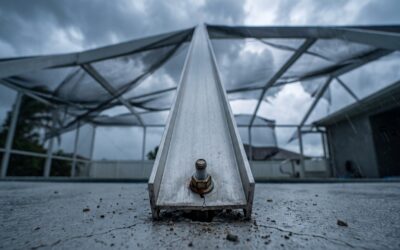
 Galvanic corrosion occurs when salt and moisture create an electrolytic bridge between dissimilar metals, slowly eating away at the structural integrity of your pool enclosure’s fasteners.
Bradenton is a beautiful place to live, but its proximity to the Gulf of Mexico creates a harsh environment for architectural aluminum. The air in Manatee County is laden with salt, which acts as a corrosive agent. When moisture from our daily humidity settles on your aluminum framing and hardware, it creates an electrolytic bridge. This starts a process known as galvanic corrosion. Over time, the contact between different metal types—particularly stainless steel fasteners and aluminum frames—leads to the degradation of the metal. If left unchecked, this process doesn’t just surface-rust; it physically eats away at the fasteners that hold your enclosure together, rendering the frame loose and prone to collapse during even minor wind events.
How Florida’s High UV Index Weakens Standard Fiberglass Screen
The intensity of the Florida sun is another silent enemy of your outdoor space. Standard fiberglass screen is designed for longevity, but it is not immortal. Under the relentless assault of high UV radiation, the polymers in the screen become brittle. Research suggests that standard fiberglass mesh loses approximately 50% of its tensile strength within three to five years of constant exposure in our climate. When the mesh loses its flexibility, it ceases to be a protective barrier. It becomes a liability that catches the wind like a sail, putting immense stress on the individual framing sections. If the screens are already “burned” by UV rays, a simple summer thunderstorm can result in large-scale blowouts that require total rescreening rather than simple panel patching.
The Financial Trap of Procrastination: Why Waiting Multiplies the Bill
From Minor Mesh Repair to Full-Scale Structural Rebuilds
The most dangerous myth in the screen industry is that a small, torn panel is a cosmetic issue. In reality, every “minor” tear is a precursor to a larger structural failure. When a single screen panel is damaged, the tension within that bay of the enclosure is altered. The surrounding aluminum framing sections are forced to compensate for the uneven load. This stress transfers directly to the fasteners, which are likely already compromised by the salt air mentioned earlier. By ignoring a $200 panel repair today, you are inviting a situation where the entire structural integrity of that wall is compromised, turning a localized fix into a multi-thousand-dollar structural rebuild.
The “Peak Season” Premium: Labor Shortages and High Demand
Timing is a significant financial factor in the Bradenton market. Many homeowners wait until the start of the “snowbird” season or the beginning of the storm season to address enclosure issues. This creates a massive spike in demand. When you compete with everyone else for the same limited pool of skilled labor, you pay a premium. By scheduling inspections and repairs during the off-peak window, you benefit from more competitive pricing and better availability. Waiting until the industry is at maximum capacity means you lose your leverage, and often, you lose the opportunity to catch issues before they turn into emergency-level repairs.
Material Price Volatility and Inflation in the Screen Industry
The screen enclosure industry is not immune to global supply chain fluctuations. The cost of raw aluminum, high-grade fasteners, and specialized mesh types has seen significant volatility in recent years. By delaying repairs, you are essentially gambling that costs will decrease or remain stable. Historically, the trend has been toward higher material costs. Proactive maintenance allows you to secure materials at current rates rather than being forced to buy into a market spike when your enclosure eventually reaches a breaking point.
The Hidden Enemy: Structural Degradation Behind the Screen
Corroded Screws and Fasteners: The Weakest Link in Your Cage
The hardware holding your enclosure together is the most critical point of failure. Fasteners are often the first component to show signs of age, yet homeowners rarely look at them until a beam starts to pull away from the pool deck. Once these screws lose their head or their shank due to corrosion, the structural connection is severed. Replacing fasteners is a relatively inexpensive preventative measure. However, if you wait until the screw hole in the aluminum beam has been wallowed out by movement, you can no longer use standard hardware. You are then looking at structural drilling, tapping, or moving to larger, more expensive fasteners, which increases the labor cost significantly.
Aluminum Beams and Frame Stress: When One Damaged Panel Endangers the Whole Enclosure
Your pool cage is a unified system. It is designed to act as a cage, meaning the components support one another. When you have multiple damaged panels, the frame begins to “flex” more than the original engineering specs allow. This cyclical motion—expanding in the heat and contracting in the cool of the night—leads to metal fatigue. Eventually, the aluminum beams will crack. This is the “Point of No Return.” Once an aluminum beam is cracked or significantly bowed, you are no longer talking about maintenance; you are talking about structural restoration.
The Integrity of Spline Sealing and Why It Fails Over Time
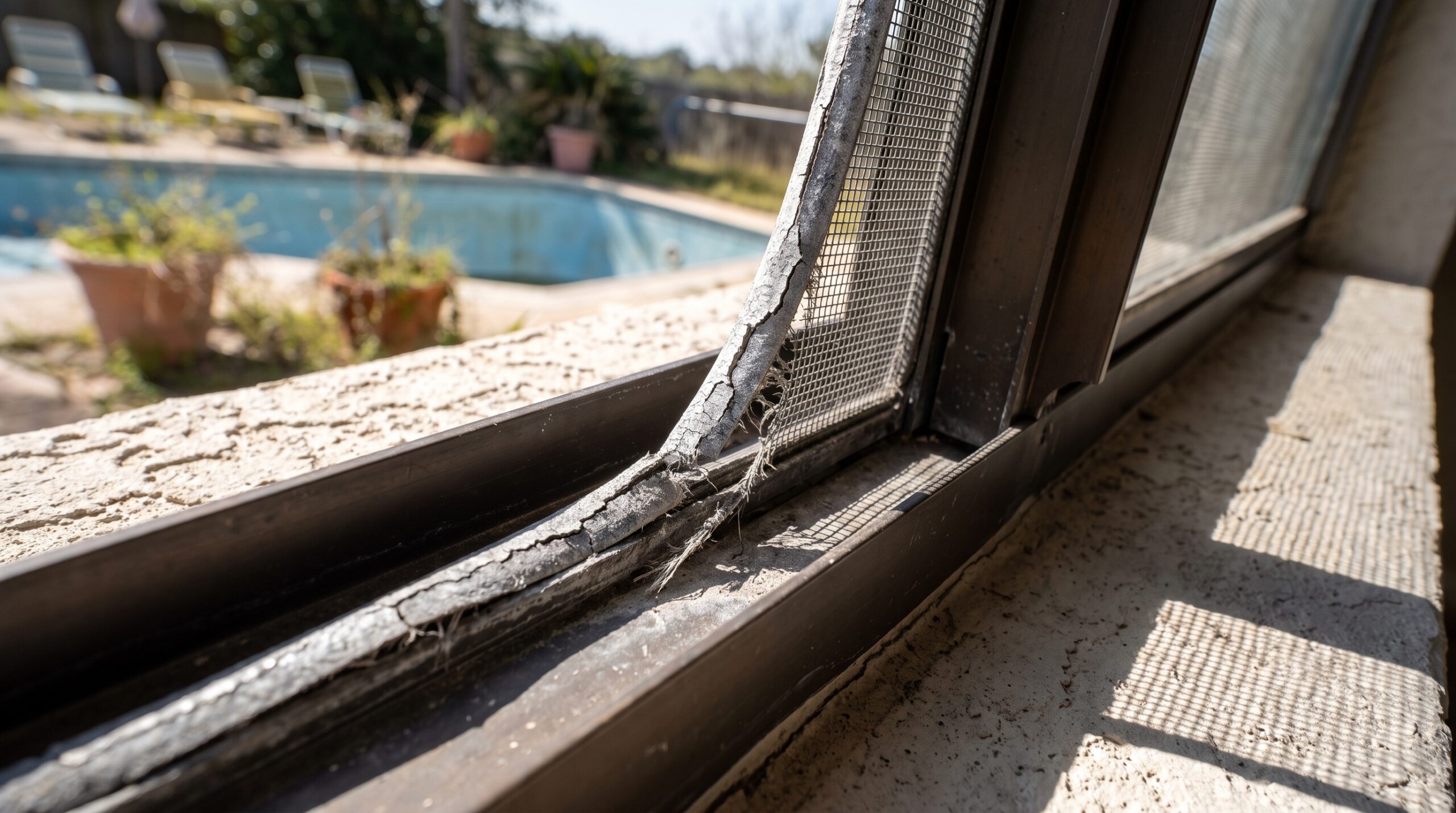
The spline is the rubber cord that locks your screen into the frame. Over time, these splines shrink and dry out due to heat exposure. A loose spline means the screen is no longer securely anchored. While this seems trivial, a loose screen system allows wind to vibrate the mesh against the frame, causing premature fraying. Furthermore, a loose screen allows pests to enter the outdoor space, defeating the entire purpose of the enclosure. Periodic inspection of your spline system is a low-cost way to ensure the longevity of your mesh.
The Storm Factor: Bradenton’s Seasonal Risks
Why a Compromised Cage is a Liability During Wind Events
Florida is the hurricane capital of the United States. A pool cage that is not up to current building codes is essentially a high-velocity projectile generator. When wind enters a compromised enclosure through a torn screen, it creates internal pressure that can lift the entire structure off the deck. Insurance companies are increasingly scrutinizing the condition of pool cages in Florida. If your enclosure is poorly maintained, you may find yourself with a denied claim or a massive out-of-pocket expense if a storm causes it to fail.
Storm Exposure and the Compounding Cost of Emergency Repairs
There is no such thing as “budget-friendly” emergency repair. When a storm strikes and your cage suffers damage, you are competing with every other homeowner in Bradenton for help. Emergency labor rates are higher, and the rush to get the job done often leads to subpar quality. The cost of “emergency” work is effectively a “waiting tax.” By maintaining your cage, you ensure it is properly braced and compliant, significantly reducing the likelihood that a standard afternoon storm will result in a major repair bill.
Florida Building Code Compliance: Why “Cheap” Fixes Don’t Meet Safety Standards
The Florida Building Code has become increasingly stringent regarding wind-load requirements for screen enclosures. Many older cages in Bradenton do not meet these modern safety standards. When you perform a repair, it is an opportunity to bring that specific section up to current code. “Cheap” fixes—like using improper fasteners or non-compliant screen attachment methods—will not pass a professional inspection. A truly professional repair ensures that every fix contributes to the long-term safety and compliance of the structure.
Beyond Basic Maintenance: Framing Repair as an Asset Upgrade
Choosing Modern Mesh Types: From No-see-um Screen to Heavy-Duty Mesh
Rescreening is the perfect time to evaluate whether the original mesh type still suits your lifestyle. Perhaps you were previously plagued by “no-see-ums” and require a finer gauge screen. Or perhaps you have added a pet to the family and need a heavy-duty, pet-resistant mesh. Modern mesh technology offers options that provide better visibility, improved airflow, and increased durability against UV rays and physical wear. Treating your rescreening project as an upgrade rather than a chore adds immediate value to your home.
The Benefits of Pet-Resistant Screens for Long-Term Durability
Pet-resistant screen is a game-changer for durability. Designed to withstand claws and playful activity, this mesh type is significantly thicker and more tightly woven than standard fiberglass. While the initial investment is higher, the “cost per year” is significantly lower because you aren’t replacing panels every time a dog jumps against the screen. For a homeowner looking to maximize the ROI of their outdoor space, choosing a high-durability mesh is one of the smartest financial decisions you can make.
UV-Resistant Mesh Materials: Extending the Lifecycle of Your Investment
The latest advancements in mesh materials focus on superior UV blocking and color retention. By choosing high-end, UV-resistant materials, you are essentially buying extra years of service life for your screens. These materials resist the “brittleness” that plagues standard fiberglass, meaning your screens will remain flexible, tight, and attractive for much longer. This is the definition of protecting an asset: paying a little more upfront to avoid replacing the entire enclosure prematurely.
Diagnostic Framework: Is Your Pool Cage at the “Point of No Return”?
Signs of Metal Fatigue and Aluminum Framing Sections Distress
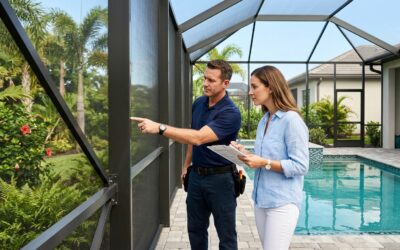
To determine if your cage is nearing the point of no return, perform a simple visual inspection. Look at the joints where your aluminum beams meet. Do you see signs of white, chalky corrosion? Is there a noticeable “gapping” between the beams? Does the structure sway or rattle when you manually shake a post? If you see bent aluminum or fasteners that have snapped off at the head, you have moved past maintenance into the realm of structural distress.
Identifying Hardware Failure and Corroded Fasteners
Take a screwdriver and try to gently test the fasteners at the base of your cage. If they crumble, spin without tightening, or are missing entirely, you have a critical hardware failure. A cage is only as strong as its fasteners; once these fail, the structure is essentially “floating” on your pool deck. This is not a situation that can be solved with a coat of paint or a quick patch.
When to Choose Rescreening vs. a Full Enclosure Restoration
Rescreening is an aesthetic and minor structural update for a cage that is otherwise sound. A full enclosure restoration is required when the frame itself is compromised. If your fasteners are failing, your beams are showing signs of fatigue, and your spline system is disintegrating, you should stop spending money on “patching” the screens and start planning for a full restoration. A reputable, professional contractor will give you an honest assessment during an inspection, identifying whether your money is better spent on a refresh or a structural overhaul.
Maximizing the ROI of Your Outdoor Space
How a Well-Maintained Screen Enclosure Impacts Home Value
Your pool cage is part of your home’s curb appeal and functional square footage. A pristine, tightly screened enclosure signals to potential buyers that the home has been well-cared for. Conversely, a sagging cage with ripped screens and rusted hardware screams “deferred maintenance” to a potential buyer, who will immediately deduct the cost of a full restoration from their offer. Investing in your enclosure is an investment in your home’s resale value.
Retrofitting Opportunities: Adding Nebula Lighting and Modern Aesthetic Upgrades
While you are already investing in a restoration, consider upgrades that enhance your quality of life. Modern aesthetic options like integrated LED “Nebula” lighting can transform your pool cage into an evening oasis. These systems can be integrated into the framing during a rebuild, providing a clean, professional look that would be nearly impossible to install after the fact.
The “While We’re Here” Efficiency: Saving Money on Multi-Service Repairs
There is a massive financial advantage to bundling services. If a professional crew is already on-site with the necessary equipment to access your roof, you should combine repairs. If you need new fasteners, new mesh, and a structural reinforcement, doing it all in one service call is significantly cheaper than calling the contractor back three times. It reduces travel time, setup costs, and the overall disruption to your home.
Strategic Timing: The Benefits of Proactive Maintenance
Avoiding the Rush: Scheduling During the Off-Peak Window
The secret to effective property management in Florida is acting before the problem becomes urgent. By scheduling your inspections during the cooler, slower months, you gain access to the best teams in Bradenton. You avoid the stress of “emergency” scheduling and ensure that the work is performed when temperatures are moderate, which is better for the materials and the installers.
Conclusion
The “Cost of Waiting” is not just a figure on an invoice; it is the compounding loss of value, safety, and peace of mind. In Bradenton, where the environment is constantly testing the limits of your home’s infrastructure, an enclosure is not a static object—it is a dynamic, mechanical system that requires regular attention. From the corrosive impact of salt air on fasteners to the structural stress caused by UV-weakened mesh, the evidence is clear: the sooner you address a small issue, the more you protect your investment from a massive financial burden.
Do not wait for a storm to reveal the weaknesses in your screen enclosure. Proactive maintenance is not an expense; it is a shield. By performing regular inspections, opting for high-quality, durable materials, and addressing hardware failure before it escalates into structural damage, you ensure that your outdoor space remains the highlight of your Bradenton home for years to come. Reach out to a professional to schedule a full site assessment today—before the small gaps in your screen become the large cracks in your property’s value. Your future self, and your wallet, will thank you.