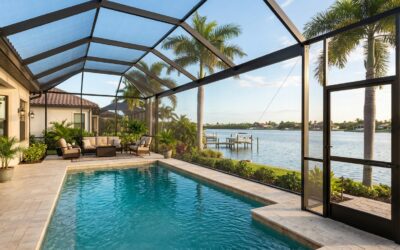
The glistening allure of Longboat Key and Siesta Key is undeniable. For homeowners, the privilege of living steps from the Gulf of Mexico comes with a singular, relentless challenge: the aggressive coastal environment. While residents prioritize aesthetic maintenance like pressure washing or pool tile care, a silent, structural crisis often develops out of sight. It starts with a faint orange streak on a clean aluminum frame, but it signifies the rapid degradation of the very components holding your screen enclosure together. In the humid, salt-heavy climate of Sarasota’s barrier islands, standard hardware is not just insufficient—it is a liability.
The Hidden Vulnerability: Why Screen Enclosures Fail Faster Than Coastal Homes
The Exposure Factor: Why Screen Systems Face the Brunt of Salt Spray
Beachfront homes endure constant bombardment from salt spray. Unlike interior walls protected by stucco and paint, screen enclosures are open-air structures designed to maximize airflow. While this provides the perfect view of the sunset, it leaves aluminum frames and their thousands of fasteners entirely exposed to airborne chlorides. This salt spray acts as a catalyst, settling into every joint, crevice, and fastener head. In the humid Florida climate, these deposits don’t simply wash away; they collect moisture, creating a persistent, corrosive slurry that aggressively attacks the hardware responsible for maintaining structural stability.
The “Invisible” Failure Point: Fasteners vs. Aluminum Frames
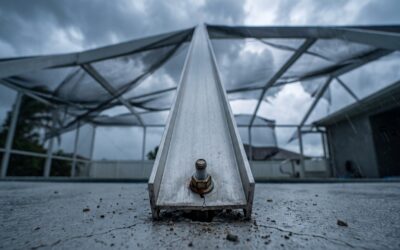
Homeowners often assume that if their aluminum cage isn’t showing signs of structural warping, it is sound. This is a dangerous misconception. The primary point of failure is rarely the aluminum itself; it is the fastener. Even when the aluminum frame remains intact, the stainless steel or galvanized hardware holding those beams together can undergo “crevice corrosion.” The fastener acts as a bridge, and when that bridge begins to disintegrate, the entire load-bearing capacity of the enclosure is compromised. You might not see the failure until a minor wind gust causes a section of the cage to detach, revealing that the fasteners have literally dissolved into rust-colored dust.
Understanding the “Galvanic Gap”: The Science of Coastal Corrosion
 The Battery Effect: How saltwater acts as an electrolyte between dissimilar metals, causing standard steel fasteners to rapidly oxidize and fail.
The Battery Effect: How Dissimilar Metals Accelerate Decay
Corrosion is not merely a reaction to water; it is an electrochemical process known as galvanic corrosion. When two dissimilar metals—such as an aluminum frame and a lower-grade steel fastener—are connected in the presence of an electrolyte (salt water), a small electrical battery is created. The fastener acts as the anode, and the aluminum acts as the cathode. Electrons flow from the fastener to the aluminum, causing the fastener to oxidize and break down at an accelerated rate. In Sarasota’s salty air, this “battery” is constantly energized, turning every connection point into a site of active, microscopic decay.
Salt Air as an Electrolyte: The Role of Humidity and Salt Deposits
Humidity is the silent partner to salt spray. Salt is hygroscopic, meaning it attracts and retains water from the humid air. Even on dry days, a fine layer of salt on your hardware absorbs moisture, ensuring the metallic surfaces remain constantly damp. This continuous state of wetness provides the perfect conductive medium for galvanic corrosion. If you live on the water, you aren’t just dealing with humidity; you are dealing with a perpetual, moisture-rich brine that initiates and sustains the breakdown of your hardware.
Why Standard Galvanized Hardware is Insufficient for Barrier Island Environments
Many older installations, or those performed by contractors cutting costs, rely on standard galvanized or zinc-coated hardware. Zinc coatings are sacrificial, meaning they wear away over time to protect the underlying steel. In a coastal environment, this sacrificial layer is consumed almost immediately. Once the zinc is gone, the underlying steel is exposed directly to the salt-heavy air, leading to rapid, deep-pitted rust. In the harsh conditions of Longboat or Siesta Key, galvanized fasteners provide only a temporary facade of protection before they become structurally useless.
Beyond “Stainless”: Decoding Metallurgy for the Sarasota Coastline
The Pitfalls of Type 304 and Type 410 Stainless Steel
The term “stainless steel” is a broad umbrella, not a guarantee of permanence. Most standard hardware found in general-purpose outlets is Type 304 or Type 410 stainless. While these are suitable for inland environments, they are fundamentally ill-equipped for the Florida coast. Type 304 is prone to chloride-induced pitting, where microscopic holes form in the metal, creating pathways for salt to eat the fastener from the inside out. Type 410 is even more susceptible to oxidation. Relying on these alloys is a gamble that inevitably results in premature failure.
The Type 316 Advantage: Why Molybdenum is Non-Negotiable
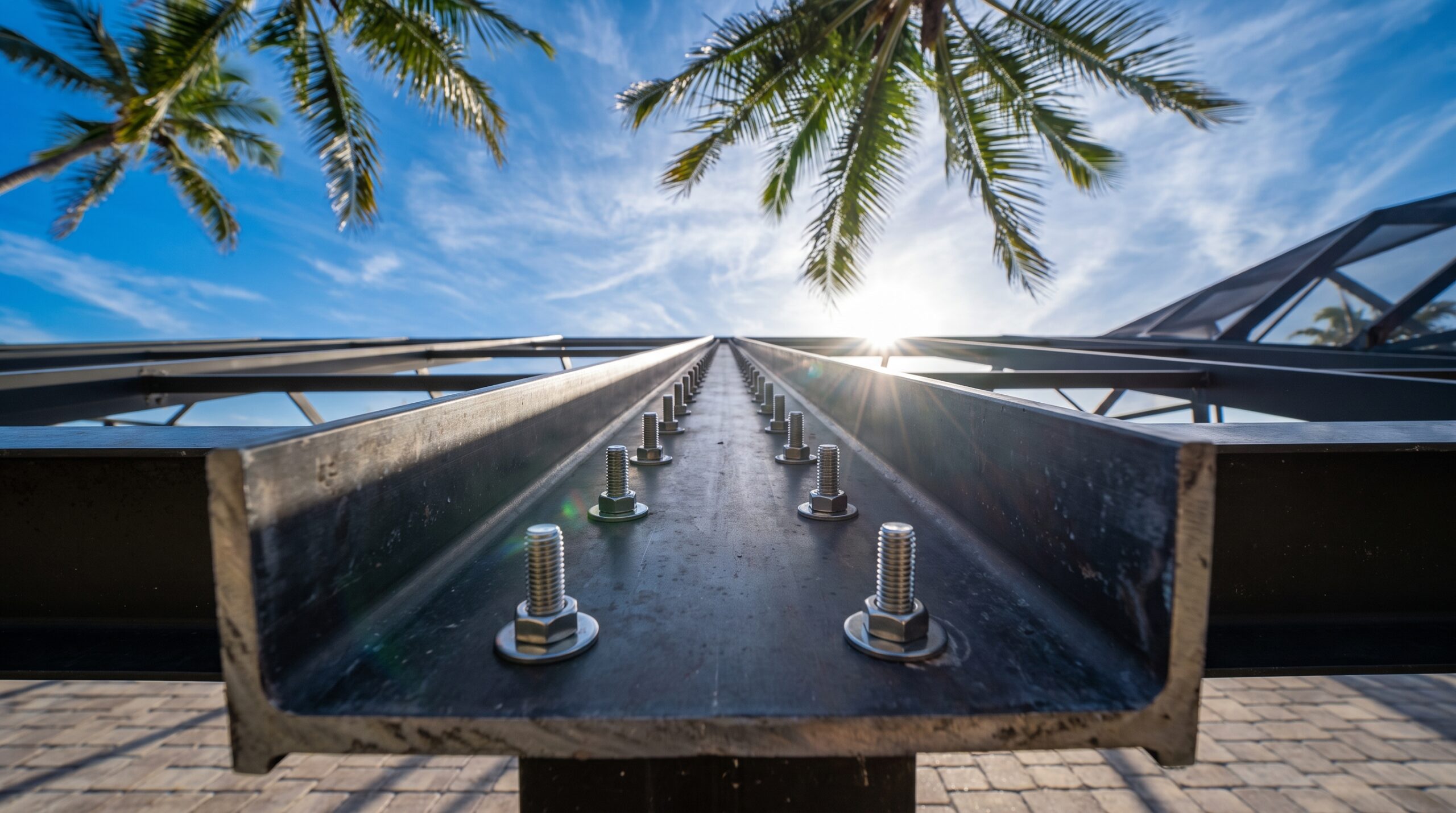
For beachfront longevity, Type 316 stainless steel is the gold standard. The critical difference lies in the addition of molybdenum—an alloying element that significantly increases the steel’s resistance to chloride corrosion. Molybdenum creates a robust, self-healing passive layer on the surface of the metal that prevents salt spray from initiating pits. In the Sarasota coastal environment, Type 316 is the only material that can reliably withstand direct salt spray exposure over long durations. It is a non-negotiable requirement for anyone serious about protecting their property investment.
Marine-Grade Aluminum Alloys and the Importance of Compatibility
Structural integrity is not achieved by the fastener alone; it requires compatibility with the frame material. Using marine-grade aluminum alloys for the structure ensures the frame itself can withstand the environment, but even the best aluminum will fail if it is fastened with mismatched, low-quality hardware. Ensuring that the aluminum extrusion and the Type 316 stainless steel fasteners are installed with proper isolation techniques prevents the initiation of the galvanic cycle, extending the lifespan of the entire system by decades.
Micro-Climates of the Keys: Direct Gulf vs. Bay-Side Risks
Siesta Key’s Salt Spray Intensity and its Effect on Hardware
Siesta Key homes facing the open Gulf of Mexico experience a much higher concentration of airborne salt than those protected by mangroves or bay-side geography. The salt spray here is carried directly by onshore winds, coating every surface in a fine, corrosive powder. In this environment, the frequency of hardware inspection must be increased. The salt deposits act like an abrasive, and when combined with the constant expansion and contraction of screen panels under thermal stress, the resulting wear on the hardware is compounded.
Longboat Key’s Humidity: How Moisture Entrapment Triggers Internal Decay
Longboat Key’s unique geography, with its mix of Gulf-side and bay-side exposures, creates varying levels of moisture entrapment. In areas with dense vegetation or higher humidity, water tends to pool around the bases of columns and window frames. When this moisture is trapped against a fastener, the rate of corrosion skyrockets. Effective design must account for these micro-climates by ensuring that every joint is properly sealed and that drainage paths remain unobstructed, preventing water from lingering in critical load-bearing zones.
The Abrasive Nature of Salt Deposits on Moving Screen Parts
It isn’t just chemical degradation; salt accumulation on door tracks, rollers, and moving screen parts creates physical abrasion. As moving parts slide over salt-crusted surfaces, they grind the salt into the metal, breaking down protective coatings and exposing raw material to the elements. Without regular removal, these moving components become seized, adding unnecessary stress to the fasteners as they struggle to hold the shifting weight of the screen cage against the resistance of stuck mechanisms.
Structural Integrity and the Florida Building Code
Wind Load Requirements: Why a Corroded Fastener is a Safety Liability
The Florida Building Code establishes stringent wind load requirements for all exterior structures, including pool cages and enclosures. These codes assume that the fasteners used in the initial construction retain their designed load-bearing capacity. A corroded fastener that has lost 30% of its cross-sectional area to rust cannot meet these safety thresholds. During a hurricane or a severe tropical storm, the failure of a single critical fastener can trigger a cascading collapse of the entire screen system.
Compliance Beyond the Surface: Ensuring Load Path Continuity in Coastal Zones
Load path continuity refers to the ability of a structure to transfer forces from the screen down to the foundation. If the connection between the vertical posts and the deck—secured by flashings and anchor bolts—is compromised by corrosion, the system is no longer continuous. Maintaining this integrity requires high-quality fasteners and consistent inspection of flashings and joist hangers. Every connection point must be viewed as a vital link in the structural chain that keeps your home’s exterior secure during extreme weather events.
How Corrosion Compromises Hurricane Protection Systems
Hurricane screens and shutters are only as effective as their mounting hardware. If the anchor points for these systems are corroded, they may fail when needed most. Homeowners should treat their hurricane protection hardware with the same rigor as their screen enclosure fasteners. Periodic testing and the use of anti-seize compounds on mounting hardware are essential to ensure that your home’s defenses remain functional and reliable when hurricane season arrives.
The “Build It Right” Checklist: Essential Components for Coastal Longevity
Selecting Specialized Stainless Steel Fasteners and Connectors
Prioritize 316-grade stainless steel for every connection. If a component is part of the structural load path—such as joist hangers or base anchors—do not compromise. Ensure that all connectors are specifically rated for marine or coastal applications to prevent the hidden decay discussed earlier.
The Role of Marine-Treated Lumber and Powder Coat Finishes
If your structure includes wood elements, ensure they are marine-treated and separated from the aluminum by proper flashing. Powder coat finishes on aluminum frames provide an excellent secondary barrier, but they must remain intact. Any scratch or chip in the finish becomes a focal point for salt-induced oxidation.
Integrating Weep Holes and Drainage Paths to Prevent Moisture Pooling
Design and maintenance must prioritize drainage. Weep holes in window frames and enclosures allow trapped moisture to escape. Regularly clear these paths to prevent the pooling that leads to internal decay and accelerated rusting of the hardware located at the base of the structure.
Why Proper Sealant Application is the Final Line of Defense
Sealants prevent water and salt from entering the tiny gaps between fasteners and frames. High-grade, UV-resistant silicones applied during installation provide an effective seal that keeps the electrolyte out of the joint. Re-sealing these areas every few years is a small price to pay for the protection it offers your structural hardware.
Transitioning from Maintenance to Asset Protection Strategy
Identifying Early Warning Signs: Pitting, Etching, and “Rust Bleeding”
Keep an eye out for “rust bleeding,” which is the reddish-brown streak that appears when a fastener begins to corrode. This is an early warning sign that the metal is actively failing. Pitting and etching on the surface of the aluminum or the fastener head are also red flags. If you notice these, the time for preventative action has already passed; it is time for evaluation and likely component replacement.
The Financial Logic: Specialized Fasteners vs. Premature System Replacement
The cost of upgrading to Type 316 hardware during initial installation or during a repair is marginal compared to the massive expense of replacing an entire screen enclosure. By investing in the right materials, you shift your mindset from reactive, costly repairs to a proactive asset protection strategy. Your home’s enclosure is a significant investment; treat its fasteners with the same respect you give to the structural beams themselves.
Professional Maintenance Plans: The Value of Regular Salt Removal
Proactive maintenance is essential. Regular professional salt removal—washing the structure with fresh water and neutralizing agents—can significantly extend the life of your hardware. A maintenance plan ensures that salt deposits are kept at a minimum and that potential corrosion issues are caught before they jeopardize the safety of the entire system.
Conclusion: Investing in Resilience for the Gulf Coast Lifestyle
Living on the Sarasota Keys offers an unrivaled lifestyle, but the marine environment requires a disciplined approach to home maintenance. By understanding the “Galvanic Gap” and the critical role of Type 316 stainless steel, homeowners can stop the cycle of premature corrosion and costly repairs. Protecting your screen enclosure is about more than just keeping the bugs out; it is about ensuring the long-term structural integrity and safety of your residence against the relentless, salt-laden winds of the Gulf Coast. Invest in high-grade fasteners, prioritize preventative maintenance, and secure your coastal sanctuary for years to come.