If you’re planning a pool cage rescreening in Florida, one of the biggest decisions is the screen material. Many enclosures are built with standard fiberglass mesh, but more homeowners are upgrading to Phifer TuffScreen® for one simple reason: Florida screens don’t just “wear out” — they get attacked by sun, storms, pets, and daily use.
In this guide, we’ll break down the real-world differences between standard screen mesh and TuffScreen®, including durability, visibility, cost, and where each option makes the most sense—so you can choose what protects your home best.
Quick Answer: Is TuffScreen® worth it?
For many Florida homeowners, yes—especially if you have:
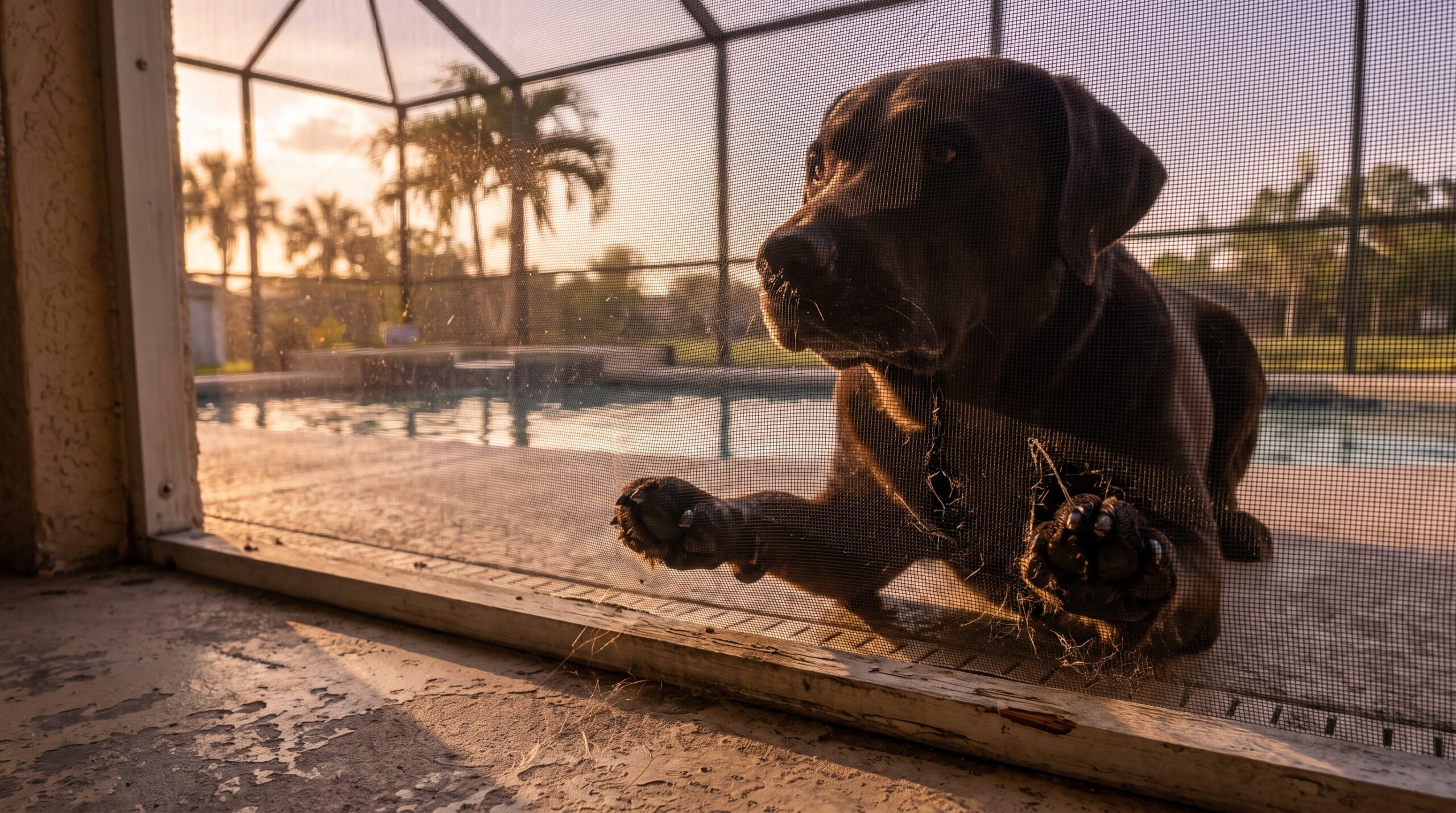
- Dogs or cats that push/scratch screens
- A high-traffic lanai (kids, guests, frequent entertaining)
- A coastal location (salt + wind + more wear)
- Frequent screen tears and “patch repairs” that keep coming back
If you’re mainly focused on maximum airflow and the lowest cost, standard mesh may still be the right fit.
Why Florida pool cages go through screens faster
Florida pool enclosures live in a harsh environment:
- Intense UV exposure that weakens screen fibers over time
- Wind-driven debris during storms (branches, palm fronds, grit)
- Daily tension from opening/closing doors and high-use areas
- Moisture + pool chemicals that accelerate aging on older materials
That’s why the “cheapest screen” often becomes the most expensive choice over a few years of repeated repairs.
What is Standard Screen Mesh?
Most “standard” pool cage screens are fiberglass mesh—popular because it’s affordable, widely available, and offers good visibility and airflow.
Pros of Standard Fiberglass Screen
- Lower upfront cost
- Good airflow and outdoor feel
- Works well for light-use enclosures
- Easy to replace when damage happens
Cons of Standard Fiberglass Screen (in Florida)
- More likely to tear or puncture from pets and impacts
- Can become brittle over time in high UV exposure
- Repeated patching can make the enclosure look mismatched
- Often needs more frequent panel replacements in high-stress zones
What is Phifer TuffScreen®?
Phifer TuffScreen® is a heavy-duty, vinyl-coated polyester mesh engineered to resist tears and punctures far better than standard fiberglass.
Homeowners often choose it for lower wall sections, doors, and any area where screens get hit, pushed, or scratched.
Pros of TuffScreen®
- Significantly higher tear and puncture resistance
- Excellent for pets, kids, and high-traffic lanais
- Holds up better in harsh weather and everyday wear
- Helps reduce the cycle of “repair → repair → repair”
Possible Trade-Offs of TuffScreen®
- Higher upfront cost compared to standard mesh
- Slightly different feel/visibility than standard fiberglass (varies by homeowner preference)
Standard vs. TuffScreen®: Side-by-Side Comparison
| Feature | Standard Fiberglass Mesh | Phifer TuffScreen® |
| Durability | Moderate | High |
| Tear/Puncture Resistance | Lower | Higher |
| Best For | Budget-friendly rescreens, low-traffic areas | Pets, kids, doors, lower panels, high-traffic areas |
| Long-Term Value | Can require more frequent repairs | Often reduces recurring repairs |
| Visibility / “Open Feel” | Very good | Very good (slightly different texture) |
Where TuffScreen® makes the biggest impact (high-ROI zones)
If you don’t want to upgrade the entire enclosure, a strategic approach can still deliver big value.
1) Bottom panels (the “kick zone”)
These panels take the most abuse—pets pushing, chairs bumping, kids playing.
2) Doors and entry areas
High contact, more movement, more chances for snags and impacts.
3) Pet areas
If your dog or cat has a favorite corner to look outside, that panel becomes a “failure point” over time.
Pro Tip: Many homeowners choose TuffScreen® on the lower walls and standard mesh on upper sections/roof to balance cost and durability.
Signs you should upgrade to TuffScreen®
If you’re seeing any of the following, TuffScreen® is usually worth considering:
- You’ve repaired the same area more than once
- You see small punctures turning into longer tears
- Your pets are repeatedly damaging certain panels
- Your enclosure is in a windy or coastal microclimate
- You want fewer service calls over the next several years
Cost vs. Value: What Florida homeowners should consider
It’s normal to compare screens by price—but the smarter comparison is:
Total cost over time = (installation) + (repairs) + (replacements) + (hassle)
Standard mesh can be perfectly fine—but if it leads to repeated panel failures, the “savings” shrink quickly. TuffScreen® often makes sense for homeowners who want:
- Fewer repeated repairs
- More peace of mind during storm season
- A stronger enclosure experience for pets and guests
Installation matters as much as the mesh
Even the best screen won’t perform well if installation is rushed or corners are cut. A professional rescreening should include:
- Proper tensioning (not too loose, not overstressed)
- Clean, consistent spline work
- Careful finishing around doors and corners (common tear points)
- An assessment of frames, fasteners, and structural integrity as needed
At Classic Rescreening, we focus on workmanship that looks clean and lasts—because a pool cage isn’t just “a screen,” it’s a major part of your home’s outdoor living space.
Frequently Asked Questions (FAQ)
Is TuffScreen® good for pool cages in Florida?
Yes—especially in high-traffic areas or homes with pets. It’s designed for durability in demanding conditions.
Should I use TuffScreen® on the roof panels too?
It depends. Many homeowners choose a hybrid approach: TuffScreen® on the walls (especially lower panels) and standard mesh overhead to optimize budget and feel.
Will TuffScreen® block airflow?
It still provides excellent ventilation, but screen “feel” can vary by product choice and enclosure design. We can recommend the best fit based on your goals.
Is TuffScreen® “pet-proof”?
It’s not indestructible, but it’s much more resistant to pet damage than standard fiberglass—making it a top upgrade for Florida pet owners.
Final Recommendation
If you want the lowest upfront cost and your enclosure is low-traffic, standard mesh may be sufficient.
If you want fewer repairs, stronger performance in high-use zones, and extra durability for pets and storms, Phifer TuffScreen® is usually a smart Florida upgrade.
Ready to rescreen your pool cage the right way?
Contact Classic Rescreening for a professional evaluation and recommendation tailored to your enclosure—so you get the right screen in the right places for long-term results.