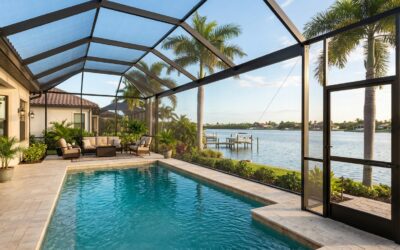
Living in Florida means embracing an outdoor-centric lifestyle, where the lanai often serves as the unofficial heart of the home. Your pool enclosure is more than just a metal frame and mesh; it is the vital barrier that allows you to enjoy our sunshine while keeping the wild Florida elements at bay. However, even the most robust pool cage faces constant environmental stress. Whether you are dealing with sagging panels, rust, or storm-related damage, understanding the intricacies of rescreening and restoration is key to protecting your investment. This guide explores the technical side of enclosure maintenance, helping you make informed decisions to ensure your outdoor space remains a sanctuary for years to come.
The Essential Role of Your Pool Enclosure in the Florida Lifestyle
Protecting Your Outdoor Living Space from Insects and Debris
A properly maintained screen enclosure is the first line of defense against the unique pressures of the Florida environment. Without a intact screen, your patio quickly becomes a magnet for mosquitoes, wasps, and other nuisance insects. Beyond pests, the enclosure acts as a physical filter, catching falling leaves, twigs, and palm fronds before they contaminate your pool water. By keeping the pool clean, you drastically reduce the frequency of manual skimming and the reliance on harsh chemical algaecides, ultimately saving time and money on maintenance.
The Impact of the Florida Climate: UV Rays, Humidity, and Salt Air
Florida’s climate is notoriously hard on construction materials. Intense UV rays act as a catalyst for oxidation, breaking down the chemical bonds in standard screening mesh. Simultaneously, the persistent humidity and salt-heavy air—especially in coastal regions—accelerate corrosion on aluminum frames and fasteners. This “triple threat” of environment-driven wear means that the structural integrity of your pool cage is in a constant state of flux. Recognizing how these elements degrade your screen enclosure allows you to transition from reactive repairs to proactive restoration.
Assessing the Damage: When to Repair vs. When to Rescreen
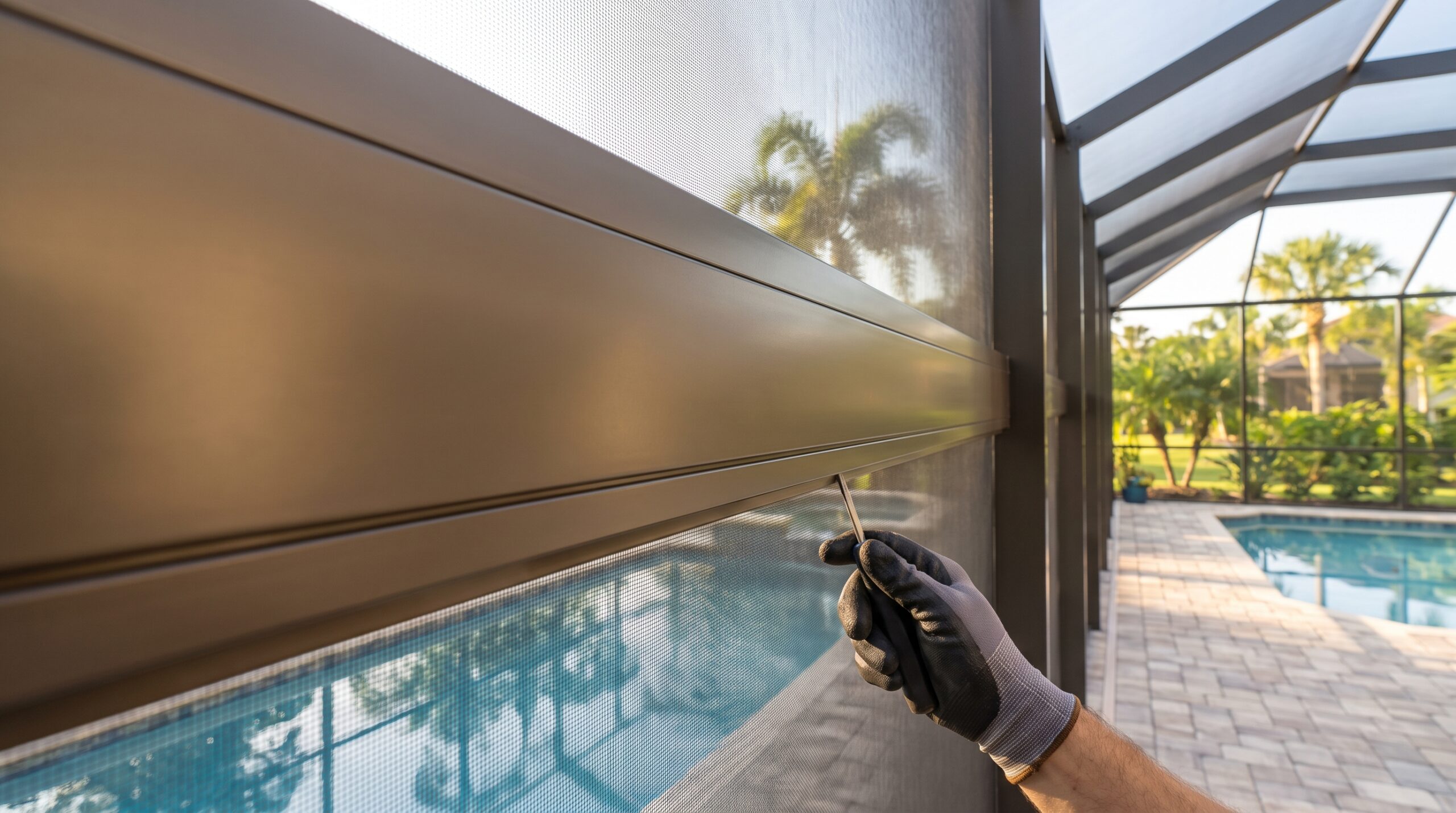
 Understanding the anatomy of your pool cage: The spline secures the mesh into the aluminum frame. Over time, UV damage causes the mesh to become brittle and turn gray, a process known as ‘silvering’.
Identifying Brittle Mesh and “Silvering”
How do you know when your screen has reached the end of its life? Look for “silvering.” Over time, the protective coating on fiberglass mesh flakes away, leaving behind a grayish, brittle material that tears at the slightest touch. If your mesh feels stiff or snaps when you apply light pressure, it has lost its UV resistance and structural elasticity. Once this stage is reached, localized screen repair is no longer a viable solution; a full rescreening is necessary to restore the enclosure’s safety and aesthetic appeal.
Recognizing Structural Red Flags: Sagging Panels and Loose Spline
A common issue homeowners face is the “slack” screen. This happens when the spline—the rubber-like cord that locks the screen into the aluminum channel—dries out, shrinks, or loses its grip. If your screen panels look baggy or sag in the middle, they are failing to provide proper tension. Loose spline not only ruins the look of your pool cage but also creates gaps that pests can exploit. Periodic inspections to check for loose or missing spline are essential to preventing panel failure before a windstorm compromises the entire section.
Evaluating Hardware Failure: Rusty Hinges and Corroded Screws
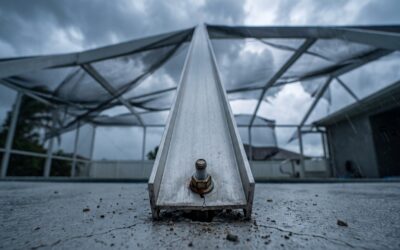
The “bones” of your enclosure are held together by hardware that often goes overlooked until it fails. Examine your fasteners regularly. If you see reddish-brown rust streaks bleeding onto your aluminum frames or pool deck, your screws are corroding. This is a critical warning sign. Corroded hardware weakens the structural connections of the cage, making it significantly more vulnerable to high winds. When the hardware fails, the entire enclosure loses its rigidity, increasing the risk of collapse during severe weather events.
Selecting the Right Screen Material for Your Needs
Standard Fiberglass Mesh: The Industry Baseline
For most homeowners, high-quality fiberglass mesh is the go-to standard. It offers excellent visibility, good airflow, and consistent durability. It is the most cost-effective option for a total rescreening project, providing a clean look that maintains the “open” feel of your lanai. While it lacks the specialized features of premium fabrics, modern fiberglass options are treated with enhanced UV inhibitors to better withstand the harsh Florida sun compared to older, non-treated versions.
No-See-Um Mesh: Specialized Protection for Tiny Pests
If you live near marshes, ponds, or wooded areas, standard mesh might not be enough to stop tiny biting midges, known as “no-see-ums.” These pests can pass through standard screen openings with ease. No-see-um mesh is engineered with a tighter weave pattern, offering a more effective barrier against these minute intruders. While this does slightly reduce airflow, the gain in comfort during the humid months is well worth the trade-off for many Florida residents.
Pet-Resistant Screen: Durability for High-Traffic Enclosures
Pets can be tough on screens. If you have energetic dogs that jump at the enclosure or cats that climb the mesh, standard material will fail quickly. Pet-resistant screen is manufactured with a heavy-duty, vinyl-coated polyester core. It is significantly thicker and more tear-resistant, designed to withstand claws and impacts. Investing in this specialized material for the lower panels of your pool cage can save you from repeated, costly repairs caused by your furry friends.
Privacy and Solar Screen Options
Privacy screen offers a darker, tighter weave that obscures the view from the outside in, providing a sense of seclusion for your backyard oasis. Solar screen, meanwhile, is designed to reduce the amount of heat and UV light that enters your enclosure. This can lower the temperature on your pool deck significantly, making the space more usable during the peak heat of the day while protecting your patio furniture from sun bleaching.
Beyond the Mesh: The Importance of Hardware and Fasteners
Why 304 Ultra Coated Stainless Steel Fasteners are Non-Negotiable
When performing a restoration, never settle for standard zinc-plated screws. In the Florida salt air, they will rust within months. You must insist on 304-grade stainless steel fasteners with an ultra-coating. These are designed specifically for the extreme conditions of pool cages. They prevent rust bleeding, maintain their structural integrity for years, and keep your aluminum frames securely anchored. It is the single most important “insider secret” to extending the life of your entire enclosure system.
Upgrading Door Hardware: Latches, Closers, and Weather Stripping
The doors on your pool enclosure take the most abuse. Frequent use can lead to misaligned frames, failing hydraulic closers, and broken latches. During a restoration, upgrading to heavy-duty, corrosion-resistant door hardware ensures smooth operation. Don’t forget the weather stripping; a properly sealed door is essential to keeping out insects and maintaining the structural integrity of the frame.
Checking the Aluminum Channel and Tensioning Systems
The aluminum channels that hold your screens are the skeleton of the cage. Ensure they are free from debris and that the channel walls aren’t bent. When installing new screen, the tensioning process is an art. Too loose, and the screen looks sloppy; too tight, and you risk pulling the aluminum frame out of alignment. A professional installer ensures that each panel is tensioned uniformly, creating a drum-tight finish that looks professional and stands the test of time.
The Full Restoration Process: From Pressure Washing to Painting
Preparing the Site: Protecting the Concrete Deck and Pool Water
A professional restoration begins with careful site preparation. This means covering your pool with a tarp to prevent old screen shards and debris from falling into the water. The deck should be protected as well. Clearing the workspace is a crucial step that ensures the quality of the finish and prevents damage to your landscaping or hardscaping during the repair process.
Structural Repairs and Reinforcement
Before new mesh goes on, the cage must be stabilized. This involves checking every bolt, bracket, and cable. If you notice structural movement or sway, it is time to reinforce the frame with gussets or additional fasteners. A stable, rigid frame is the prerequisite for a long-lasting screen installation.
Professional Painting with Weather-Resistant Coatings
Over years of exposure, the original factory finish on your aluminum cage can chalk or peel. Many homeowners opt for professional painting during the restoration process. Using industrial-grade, weather-resistant coatings, you can refresh the look of your enclosure while adding an extra layer of protection against oxidation and the salt-air cycle. This step alone can make an older cage look brand new.
Precision Installation of New Screen Panels
Once the frame is prepped, the installation of the new mesh begins. This requires specialized tools to feed the spline into the channel without cutting the screen. Every panel must be measured, cut, and tensioned with precision. An expert approach results in a uniform appearance, where all panels look identical and consistent across every face of the enclosure.
Addressing Storm and Hurricane Damage
Post-Storm Inspection Checklist for Homeowners
After a storm, perform a visual sweep. Look for missing panels, bent aluminum members, and loose screws. Check the integrity of the roof panels, as these often take the brunt of the wind. Even if there is no obvious damage, check the base of the frame where it meets the concrete—this is where the most common failures occur after high-wind events.
Documenting Damage for Insurance Claims
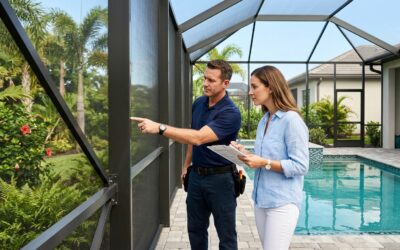
If your cage sustains significant damage, documentation is key. Take high-resolution photos of every torn panel, every bent member, and any rust streaks that indicate fastener failure. Keep records of your professional inspections and maintenance history. Being organized makes the claims process significantly smoother and ensures you get the coverage you deserve for the necessary repairs.
Reinforcement Techniques for Hurricane Preparedness
Can you make your cage stronger? Yes. Adding extra stainless steel bolts, strengthening the corner gussets, and ensuring the door is properly braced are effective ways to improve your enclosure’s wind resistance. While no pool cage is truly “hurricane-proof,” these reinforcements can be the difference between a minor repair and a total rebuild.
Maintaining Your Restored Pool Cage for Longevity
The Pro’s Secret: Seasonal Maintenance Checklist
Consistency is the secret to a 20-year lifespan for your enclosure. Every season, do a “walk-around.” Check for loose spline, wipe down the aluminum frames to remove salt and grime, and clear any debris that has built up in the perimeter channels. A small, five-minute inspection once a quarter can catch a loose panel before it becomes a large, expensive repair.
Safe Cleaning Methods for Aluminum Frames and Mesh
Avoid pressure washers on your screens. The high pressure can easily cut the mesh or damage the spline. Instead, use a soft-bristled brush, a mild detergent, and a gentle spray from a garden hose. For the aluminum, a simple wipe-down with soapy water is sufficient to remove salt deposits. Treating your screen like a delicate fabric will keep it performing at its best for years.
Clearing Debris from Gutters and the Enclosure Perimeter
Clogged gutters and debris trapped at the base of the screen create a moisture trap that accelerates corrosion. Ensure your gutter system is free-flowing and that the bottom of the enclosure has adequate drainage. By keeping the base of the cage dry and clean, you prevent the premature decay of the frame and the underlying materials.
Conclusion
Restoring your pool enclosure is one of the most effective ways to enhance your home’s value and your daily quality of life in Florida. By understanding the science behind mesh degradation, the importance of high-grade hardware, and the nuances of professional installation, you can transition from simple, temporary fixes to long-term asset management.
Remember: A successful restoration relies on quality materials like 304-grade stainless steel and a commitment to regular, seasonal maintenance. Don’t wait for a panel to blow out or a hurricane to expose existing weaknesses; be proactive. Choose an experienced provider who values technical precision over speed, and your lanai will continue to serve as the perfect, insect-free gateway to your Florida lifestyle for many years to come. Investing in your pool cage today is, quite simply, the best way to protect your enjoyment of the Florida sun tomorrow.